Showing posts with label Māori. Show all posts

Wednesday, May 21, 2014

Re-shaping assessment to value different forms of 'success'

Assessment is always a hot topic, whether you are involved in formal education or other forms of learning and upskilling. This webinar session, facilitated by Manu Faaea-Semeatu and Nadell Karatea-Kokiri, focussed on how we can re-think and re-shape assessment. In part this is through re-defining what constitutes 'success', especially for our Māori and Pasifika learners.

Position yourself as a learner

One of the first things to do when re-thinking assessment is to to position yourself as a learner, and Nadell suggested asking yourself the following questions:
  • What things do I love doing when I am a learner?  
  • What inspires me?  
  • What am I passionate about in terms of Māori Education?  
  • What spins my wheels in the learning that I do?  
  • What style of learning do I enjoy and what keeps me focussed when I’m in a learning environment?

Traditional views of assessment

Traditional views of assessment, Nadell explained, "see classrooms full of tamariki (children), all in one space having to sit and listen. The teacher delivers a concept or problem for them to engage with. If this is how our tamariki are learning, what are we expecting when we assess them? The emphasis in this environment is placed on the grade rather than what students have been asked to learn".  

In a re-framed view, rather than assessment driving the learning, the learning drives the assessment. Nadell mentioned that "schools do need to know what the learning outcomes are learners. Accordingly, at times school-wide data should be collected and analysed. Schools do this to modify their policies, teaching programmes and teaching activities in order to improve learning outcomes".

Nadell went on to speak about Te Marautanga o Aotearoa (the Māori equivalent of the NCEA), which embraces strategies that are most efficacious for Māori learners, and Māori achieving success as Māori. 

Assessing for success: Strengths-based assessment


How can we assess for success? We should be looking at strengths-based success. The ideology of NCEA is to measure skills and competencies and how well they do those things...this is a strengths-based approach. The intention of NCEA is based on the premise that NCEA was not designed for students to fail.  Assessment is not designed for students to fail - but test what knowledge they have learned.  These are things that the kids are good at AND how well they do these things.  NZQA has produced two strategies, ‘Te Rautaki Māori a te mana mātauranga o NZ and the Pasifika Strategy.

Success as an acronym can be viewed as:
  • S = scaffold
  • U = Unite
  • C = Co-create (something great)
  • C = Capture (the rapture. Not sticking to the curriculum and making the most of the learning)
  • E = Elevate (to perpetuate. The students are constantly on a high and experiencing levels of success)
  • S = Strive to thrive (developing a high level of resilience)
  • S = Support (what is taught).

Some examples

Nadell talked about the Year 2 and 3 tamariki from Te Arawaru, a Central Normal School learning about ‘patterns’ to make kete.  She asked "what things do our tamariki Māori love learning about? What types of activities engage our tamariki to learn and to also work collaboratively together?  What spins their wheels?  ‘Mā te tuakana, ka tōtika te teina, mā te teina ka tōtika te tuakana’". Every day the tamariki meet together for a karakia, and the tamariki lead the karakia. The "whole team...whānau...start each day off together and end the week together sharing and learning while developing oral language".  Waiata and haka are also shared at this time "it's a time for our tamariki to be confident" and it's "a time for the audience to ask questions". When scaffolded and supported "our tamariki are able to lead their learning".

The Gagana Samoa Speech Competition offers students opportunities for NCEA Levels 1, 2, and 3 Gagana Samoa students to participate in the ASB Polyfest. Manu explained that having students speak about their language and culture in an environment that they are comfortable is essential. There also need to be opportunities to access NCEA frameworks in different subject areas that lean towards valuing Pasifika heritages, languages and cultures.  One way of extending this is working with other subject teachers in other curriculum and learning areas to see how Pasifika learners can engage in standards that work for them – not the other way around. "Strengths-based approaches are key, because this prepares students for the career pathways of their choice – we work towards what we are passionate about and good at!!" "The ability to gain credits through performances enables students to experience success, and this often transfers to other learning areas".

Questions you may also be asking...


One of the first questions to be asked was by Viola who wrote "How do you see success in perhaps the Arts transitioning into other curriculum areas?" Manu responded that once students had experienced success, it definitely increased student confidence and transitioned into other subject areas (as Janine said "success breeds success").
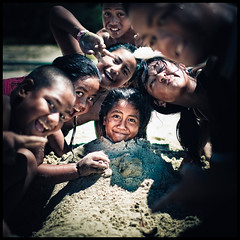
Another great question was from Gaylene who asked "How can we at schools involve whānau more effectively in assessments?" Nadell responded that much of it is about building relationships - rather than the only contact being the phone call saying that their son or daughter isn't listening in class. One example, Nadell gave was of a school that opened up their computers one evening and whānau came in to do work alongside their tamariki. The first thing therefore is to create an environment where families feel safe and comfortable. Manu added that you could also ask whānau for "content for assessments and context that could be used".

Heather asked a question around stereotyping "the tone of it was a lot of deficit thinking". "How do you empower students to be assessed orally in a way that supports literacy development?". Manu responded that oral assessment can be used to test reading and writing skills, but "this is from a deficit model". "I would look to extend this further and encourage students to transition the oral to the writing...to listen to recordings of themselves. It's also important to know that students need more time". "It's also important to engage the student around what they are interested in and to base assessment on those interests".

The final question to be posed was: "There is a comfort level for schools (perhaps) to offer a one size fits all assessment and standardised assessment. At what level(s) do you feel that thinking around how we design and facilitate assessment need to be?" Manu spoke about research she has conducted, which has enabled her to offer advice and guidance to schools about how to best enable students to succeed. When designing a programme of learning that, rather than looking at a package per year, rather all the standards need to be inter-linked, with ample opportunity to connect with the material. And having these links helps students to connect with this a lot stronger.

So how are your assessment 'lenses' now?


Manu closed by asking:
  • So how do you now view assessment for Māori and Pasifika learners?  
  • Was it a tiny adjustment to make?  Have the shape of your lenses totally bent out of shape? 
  • Does it inspire you to consider improving your views about how to make assessment more responsive to the needs of Māori and Pasifika learners?  Making it more high-tech? 
  • How are your lenses?  

Missed today's session or want to participate again?

If you missed today's session, you can access the recording of session, and also you can access the slides below.


Images

  • Pasifika Patterns. CC (SA NC) licensed Flickr image by teachernz: https://www.flickr.com/photos/teachernz/3191268792/
  • Hawaiian Village. CC (BY) licensed Flickr image by US Embassy New Zealand: https://www.flickr.com/photos/us_embassy_newzealand/13023933753/
  • Maori Kids. CC (SA NC) licensed Flickr image by dicimijo: https://www.flickr.com/photos/dicimijo/441417770/
  • Locals. CC (BY NC) licensed Flickr image by AMERICANVIRUS: https://www.flickr.com/photos/americanvirus/4418566004/
  • Life through a lens. CC (BY NC SA) licensed Flickr image by Caro Wallis: https://www.flickr.com/photos/carowallis1/4274112043/
  • Pasifika achievement and e-learning. CC (BY NC SA) licensed Flickr image by Karen Melhuish Spencer: https://www.flickr.com/photos/karenmelhuish/8668105348/


Tuesday, October 22, 2013

Looking at learner success through a cultural lens: Iwi and whānau 'speak'

Image of a koru Melanie Riwai-Couch opened the Te Toi Tupu hui by talking a little bit about the work she is doing with iwi. A lot of the things she is looking it is around iwi and whānau 'voice'.

Melanie is from a bicultural marriage at a time when it was unusual, and when her parents split, her father brought her up. Growing up with strong Māori roots gave her an interesting perspective on life. She lives and works in Ngāi Tahu, but does not claim Ngāa Tahu in her ancestry. There is a whole other world when it comes to iwi.

Melanie also teaches at the kura, and she discovered all of these things that didn't work for me. The students tried really hard, but there were a lot of things that kept tripping them up. For example, the letter 'i' - is it always a capital letter? So why doesn't me, he, and she have a capital letter too. It was a way to peel back the cultural layers of the spelling traditions, and the cultural shaping that underpins them. She went to the community partners to see if she could find student teachers who would come into the kura and to sit with the children while they read.

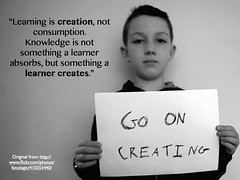
Go on creatingThe initiative resulted in several hundred hours of extra reading for the students - and this, Melanie feels, has helped students create a love of reading. There was a sustained shift of at least 1 to 1.5 stanine (PAT), and up to 4 to 5 stanines. This led to Melanie to ask the question, "In what ways are iwi and schools working together to improve Māori student achievement". Students also grow in confidence ("I'll probably succeed in a lot of stuff like getting a degree at University" - Māia, Year 8), and are happy to speak to pretty much anyone.

Parents also say "success for them is to be standing strong and confident and humble in anything and everything they chose to do and to be able to make mistakes and learn from them". And an Iwi education representative said that "it's that whole person" that is key, and another that "Maori student success is when student are grounded in who they are and where they come from whilst achieving success in whatever field they choose no matter where in the world they are" (Iwi Education Representative). Potential is not something that is based in the future, but it is something that students are 'being' and realising.

Three case studies (Ngā Puna Korero) have informed her thinking to date. The sort of thing that is emerging are the importance of sustaining high trust relationships, and this means that, in part, it's working with iwi in the way that iwi want to be worked with. In part this means working within communities of practice that tend to be more responsive to the needs of the participants. One of the students said "people with two languages like us are gifted, bi-lingual and bi-literate. We are talented and clever" (Ruamano, Year 10). Not all iwi receive money from the ministry for education. The purpose of Iwi Education Project funding is "to build iwi capability to engage in and contribute to the education system and the education of their whānau and hapu. This appropriation is primarily used to produce iwi education strategies, reo strategies and implementation plans; and to deliver iwi education project" (Ministry of Education, 2013, p. 1). However, there are tensions between expectations and responsibility - i.e. whose responsibility is it to implement some aspects of an initiative. The 5 iwi with the main schools include Ngai Tahu (579), Ngati Whatua (397), and Ngati Maniapoto (144). The amount of funding, compared with the geographical area or the schools they work with, however, was not scaled to the funding received...ranging from $40,000 per school to $193 per school that they work with. Resourcing is therefore an issue.

The best way to influence the impact schools is, Melanie proposes, through working with organisations such as Te Toi Tupu. Ideally, it is a case of contacting and working with all stakeholders...something that isn't possible if resourcing isn't sufficient. At the end of the day, however, a student has succeeded when students have the confidence and skills to come back to work with iwi. It's about young children building a sense of where they are from, who they are 'from', what they are doing now (as a whole, culturally shaped person), and also where they are heading next.

 Images
Enhanced by Zemanta

Wednesday, August 22, 2012

Māori and Pasifika learners: To make change it has to be a tide rather than a wave

ASB Polyfest 2008 Avondale College Samoan Group
ASB Polyfest 2008 Avondale College Samoan Group (Photo credit: Richard Sihamau)
Today (22nd August 2012) I was privileged to be a part of a webinar "brought to us by the VPLD project", discussing some thoughts around working with Maori and Pasifika learners (recording can be accessed here).

The session was opened with a traditional Maori waiata being played of Whirimako Black singing E Kumara about sharing the goods, treasuring things important. Merryn then greeted everyone and shared some of the different ways of offering greetings in Maori and Pacific languages, and then offered the following whakatoki:
Na to rourou, na taku rourou ka ora ai te iwi
With your food basket and my food basket the people will thrive
A slide from Waikato University (2003) was introduced, that looked, from a Pakeha perspective, the Maori pedagogies. Other factors that were mentioned, including those on a diagram by Peta Sharples and his team.

ASB Polyfest 2008 Ruderford High Maori Group
ASB Polyfest 2008 Ruderford High Maori Group (Photo credit: Richard Sihamau)

Heather started by speaking about one of the students with whom she is working, and spoke in particular about the content of this video. This student feels as though that her Maori language is her strength, and that by using the language was a way of showing respect, and by showing respect to her culture she indicated that you "show respect to me". Heather went on to describe the conversations that she has been having with colleagues, as well as (perhaps more importantly) the students. "It was like opening the floodgates...why haven't we been doing this all along? This is the way I can connect with my students." She also said that it pushed it out of her comfort zone as she was worried about causing offence, feeling inauthentic - especially with her Canadian accent, and other concerns. However, she persisted, and set herself the learning objective (that she shared with her students) "How do I incorporate Maori language into the classroom", and now she is finding that her students often support and guide her in her learning journey. She gave a lovely example of one student who created a PowerPoint with language she feels Heather should know! Heather is now finding that students are dropping in to her classroom and she is finding out more about their families, and feels that the response is because she is meeting them within their own culture. There was also an example about how a student has really started to engage since Heather has acknowledged him 'authentically', and he is now becoming more involved in class. There was some neat follow up discussion after Heather's contribution, especially around respect, and relationships.

A himene was played, and Merryn explained why it's culturally responsive to include such songs, and recognising the importance of protocols. Vicki mentioned that she has students other than Maori and Pasifika including "a Sri Lankan girl, a Hindi girl and another who is Jewish and Korean in descent. Provides lovely variety for the building of tolerance and understanding of others that are different".

Marg talked with enthusiasm about a range of amazing initiatives that she is working on with the students, school and community, and showed a prezi which illustrated many of things the students are doing at Ashburton college (with 1200 students where 6% are Pacific Islanders and 11% are Maori. They have one specialist ESOL teacher at the school and they are lobbying for more. They have a working group who are working toward providing support for the Pasifika students. Students are being encouraged to step into the leadership spaces - especially important where the community members work long hours, and awesome for the students who stepped up to take on the roles as cultural leaders. One example was where the students have created a homework space for the community to study after school, that is warm, dry and welcoming. At the cluster meetings they share data, ideas about the issues as they see them, and have conversations around how they can start to help each other outside the parameter of a single school. Marg described the excitement (and successes) at Polyfest 2012. There are some wonderful things also underway such as reading mentor groups, which are proving to be incredibly popular...and effective. The community supports the reading groups to provide food and reading materials.

It was wonderful to hear about the incredible initiatives that are coming from the heart; ideas, and strategies that encourage students to step up and be heard, who are shown respect, and who grow while leading and teaching - "to make change it has to be a tide rather than a wave" (Merryn). So who is also trialling such initiatives? Please share experiences and ideas.

You can access a copy of the recording of the session here, as well as Marg's Prezi here, and Heather's video here.


Enhanced by Zemanta

Wednesday, July 25, 2012

A confession, a smartphone, and Māori Language Week

English: Samsung GalaxyA confession...about a year ago I bought a smartphone (Samsung Galaxy), and I have found it really useful. I must admit, until the point where I had my very own smartphone...and for probably the first couple of weeks while I shifted my mindset, I couldn't see what all the fuss was - especially for enhancing learning opportunities.

One of those folk who bleated on about the screen being too small for anything useful, and "you can't type anything of any meaningful length" (I blush), I have now experienced some of the neat complementary aspects that a smartphone can add to my old workhorse laptop, especially as most of my life is in the cloud now.

One of the neat things, of course, are the apps. And, one I trialled yesterday had me instantly engaged and I could see how it would come in useful in my professional, as well as personal life. The Hika Lite app (launched during Māori Language Week in NZ), has a range of common expressions categorised under every-day interactions such as greetings.

Carolyn Bennett, who shared the app with a community I'm a member of wrote:

Morēna koutou - Hika was conceived by Sophie Tauwehe Tamati as an attempt to revitalise te reo Māori through a fresh approach to learning. By using modern technologies, audio, visual and kinesthetic functions, Hika makes learning and communicating in te reo Māori easy and fun.

This wonderful app for iphones and Androids can be downloaded free to celebrate Māori Language Week (Whakanuia Te Wiki o te Reo Māori). Highly recommended.

Nga mihi nui
Carolyn


Image
Samsung Galaxy (Photo credit: Wikipedia)

Friday, June 3, 2011

E-Learning Provision and Participation: Trends, Patterns and Highlights

Blended learning definition (Heinze and Procto...Image by hazelowendmc via FlickrThe following was posted on a discussion forum I am a member of, and I felt that some of the findings challenged some of my assumptions, while other findings confirmed them :-) Makes for interesting reading:

"The Ministry of Education NZ has released a report on tertiary education sector e-learning provision from 2004 to 2008. This report looks at trends, patterns and highlights in e-learning in the tertiary sector over the time period 2004 to 2008. For the purposes of this report e-learning is defined as: ‘Learning that is enabled or supported with the use of Information Communication Technologies (ICT).’ These ICTs include the internet, video conferencing, and interactive whiteboards.

As ICT use increases in the wider society and education, for example through the NZ Government’s Ultrafast Broadband programme, this report analyses how much e-learning is being provided at a system, course and sub-sector level.

Key learner group participation patterns in e-learning courses are analysed to help determine what the underlying drivers are for participation.

Summary of the key findings (taken from the Education Counts site)
  • From 2004 to 2008, there was more provision of traditional delivery courses than e-learning but the proportion of e-learning provision increased especially at higher qualifications levels.
  • The majority of provision at degree level uses e-learning but e-learning is in the minority at certificate level.
  • Adoption of e-learning is greatest at universities.
  • Younger people had higher e-learning participation than older people who had a majority involved in traditional delivery.
  • Pasifika had higher e-learning participation than other ethnic groups. Māori had the lowest e-learning participation.
  • Some subgroups were identified who used web-based delivery as a means of accessing tertiary education because they were unable to access traditional delivery teaching because of work or family commitments. This included some Māori and older learners.
The full  report is available on the Education Counts website. "
Enhanced by Zemanta

Saturday, June 5, 2010

Links to ideas, resources, and tools for learning and teaching te reo Māori

The Arms of Her Majesty in Right of New Zealand
Image via Wikipedia


Kia ora koutou katoa.

Ideas for communication around and through Web 2.0 can be in a vast array of languages. Language learners and teachers are increasingly recognising computer mediated communication and multimedia as key factors in learning the mechanics of the language, as well as for connecting learners, encouraging students to create their own artefacts, and enhancing the exploration of socio-cultural aspects of language. Te reo Māori is one such example.

The following represents a brief selection from a large range of ideas, exemplars, resources and tools for te reo Māori. Please make recommendations around other resources you may have found useful, and share any feedback you may have about those mentioned below.

Ideas for learners
Ngā whakaaro mō Te Wiki Reo Māori - Ideas for Māori Language Week: The introduction to these ideas reads "No matter what your level of fluency, there are many things you can do to celebrate te reo Māori. Of course, you can try these suggestions all year round, but Māori Language Week is a great time to start!". The page goes on to make over 20 suggestions, with links to supporting resources and sites. There is also a language club that enables students to make contact with other learners.

For learners making their own resources, these two short videos - Let's go out and eat (by Lucy, Maddy and Darren), and one by Katie, Evie and Fran about a hangi, give a nice example of students working together to create something that they have shared with the world in general, and which can be rated and commented on.


For material for discussions around language and culture, there are a couple of interesting resources that could be used with learners. For example:

Resources

This site has a rich selection of resources, some of which are interactive. Learners can, for example, click on a word and hear the pronunciation, then test their knowledge with online activities. There are also sections suitable for beginners and advanced learners, as well as for businesses. A great place to find out about protocols as well. There is also a downloadable resource with language learning strategies.

There is a reasonable selection of online resources around the meanings and pronunciation of Te Reo Māori on the Internet. Some of the best include really clear videos that show the mouth shape as well as the audio, (from www.maorilanguage.net who also have a You Tube channel you can subscribe to), which model the pronunciation of the vowels and consonants. The site also has an annotated list of links to online dictionaries and translators, and a range of commons phrase 'drills'.


Māori television and Māori radio are both good sources of authentic language, but would need scaffolding for early learners, and it would be a good idea to have some sort of task associated, such as a blog post about a programme enjoyed in a specific week, which is then shared with other learners.

The Treaty of Waitangi can be read in Māori (with accompanying audio read by Whetu Scott that needs Windows Media Player installed to play the files) and English.

Te Kete Ipurangi (TKI) – The Online Learning Centre have a wide range of multimedia and interactive resources, related to Māori Education including myths, dance, ancient civilisations, collaboration and cooperation, and dramatic performance - to name but a few!


Initiatives / Creative Projects


Tools

The launch of Google in Te Reo Māori is discussed in this blog post and this video. To change the language that you view the Google interface in follow these instructions.


Reblog this post [with Zemanta]