Showing posts with label "mobile learning". Show all posts

Tuesday, May 15, 2012

Mobile learning in the classroom...sound odd to you?

The iPad on a table in the Apple caseThe iPad on a table in the Apple case (Photo credit: Wikipedia)I have just finished reading a post (and comments) that was recommended by Greg Carroll, and found it a thought-provoking read: Amidst a Mobile Revolution in Schools, Will Old Teaching Tactics Work?. It was a little odd, however, that the main focus of the article was that students brought the mobile devices with them to a classroom. Hmmm - the article discusses and calls for shifts in pedagogy and teacher practice, but fundamentally the key model is that of bums on seats in a physical classroom (although, to be fair, mention is made of a student-created guided tour, and use of QR codes).

The wine in my mind is indeed the same, even if the pedagogical bottle is slightly re-shaped. There is a sense that the writers may have not taken the endgame far enough to really explore mobile learning when it perceived as a set of principles that can enhance formal and informal learning opportunities, rather than a series of devices. Learning then becomes:
  • Spatial - learning across space (anywhere)
  • Temporal - learning across time (any time)
  • Cognitive - learning across domains (any topic) (source)
Once this shift is made, the conversation changes from one where the concern is “new technology [applied] to old pedagogy,” (Soloway), to one where learning and the student become the focus.
Enhanced by Zemanta

Wednesday, April 11, 2012

Changing culture of learning: Mobility, Informality, and connectivity

To teach is to learn
This is the second live blog post I'm making from DEANZ 2012. Kwok-Wing Lai is a professor of education at the University of Otago, and I remember reading one of his books when I first started being interested in eLearning about 12 years ago. Today Kwok-wing started by talking about knowledge, skills and soft-skills that students require to be successful in society. In NZ students are seen as "lifelong learners who are confident and creative, connected, and actively involved" (The NZ Curriculum, 2007, p. 4). NZ students are to become "competent thinkers and problem solders....actively seek, use, and create knowledge" (p. 12). Developing human agency in this way requires a change in culture around learning and teaching.

On average 8 yo 18 year olds spend 25% of time using social networking. A survey conducted by Kwok-Wing looked at the learning characteristics that young learners have (for example, working in groups etc). Michael Wesch "a crisis of significance" - his findings indicated that his students were struggling to find a meaning in their learning. To develop agency in learning it needs to be situated, authentic and personalised. Kwok-Wing showed Michael Wesch's video A vision of students today. to indicate some of the aspects of learners today. He then looked at informal learning as:
  • Spatial - learning across space (anywhere)
  • Temporal - learning across time (any time)
  • Cognitive - learning across domains (any topic)
"....there is no teacher, no defined curriculum topic or concept". We are already doing it. 18.5% of learning happens in formal learning environments. Informal learning includes using technologies to find things of personal interest, connecting with friends, and as a distraction.

Many teachers do not see informal learning as they domain. But there is a semiotic relationship between formal and informal learning "The emphasis is on sharing, working together, and using a wide range of cultural references and knowledge..." (Sefton-gree, 2004, p.33). Mobile learning, Wing-Lai referred to as mobility in physical space, technology, conceptual space, social space, and learning dispersed over time (Sharpes, Arnedillo-Sanchez, Milrad, & Vavoula, 2009) = agency in learning. Mobile learning, therefore, is a set of attitudes, dispositions, and "habitus of learning" (Kress & Pachler, 2007). Knowledge is not fixed, not transmitted by authority, and we are constantly creating knowledge. There is a shift in control via ubiquitous access to learning resources, and in turn, the learners produce knowledge. This person is a mobile learner...and the whole world is mobile...the whole world is our curriculum. The goal of knowledge building is "the production and continual improvement of ideas of value to a community" (Scardamalia & Bereiter, 2003, p. 1370). And the role of the teacher is to support students to ask questions.

How can we use technologies to make learning more connected, more mobile? In Knowledge building students work in a community, investigate a topic, ask questions, conduct research, and self-assess progress. They also engage in face-to-face and online discussions to share, critique, build on, and synthesise ideas that are new to the community. It is a way of advancing personal and community knowledge.

Kwok-Wing then moved on to talking about 3 initiatives currently underway in NZ including a postgraduate course on teacher development, The Otago University Advanced School Science Academy (OUASSA), and with senior secondary school students. The question about how this approach might be applied within a school curriculum was then addressed, with particular reference to the OUASSA project.

Tuesday, February 7, 2012

Untangling notions of the flipped classrooms


Having done a wee bit more research around the Flipped classroom that centre around videos, I found this rather thought-provoking blog post by Jackie Gerstein entitled Flipped classroom full picture: An example lesson

Jackie quotes Harvard Professor Chris Dede (Global Education 2011 keynote) who said the following about the flipped classroom . . .
I think that the flipped classroom is an interesting idea if you want to do learning that is largely based on presentation. You use presentation outside of the classroom. Then you do your understanding of the presentation and further steps from the presentation inside the classroom. I think it is a step forward. It is still, in my mind, the old person.  It’s still starting with presentational learning and then trying to sprinkle some learning-by-doing on top of it.  I am interested more in moving beyond the flipped classroom to learning by doing at the center than a kind of the intermediate step that still centers on largely on tacit assimilation.

It is also worth reading "Setting the flip straight" (Aaron Sams), who writes:
Educators should always continue to evaluate the efficacy of an adopted model of instruction. This goes for Flipped Class, Inquiry, lecturing, Unschooling, or whatever educational model you use. I have been a teacher for 12 years, and I have modified my instructional practices every year based on my own reflection, feedback from students and emerging educational practices.

He goes on to caution that the flipped classroom is way of thinking about learning...and teaching, rather than a specific way of doing things, that are reliant on specific technologies.

Jackie then provides a detailed step-by-step example that shifts away from the didactic presentation model to one that focuses  "on the students’ personal experiences, interactions with other students, and acquisition of tangible life skills". Well worth having a look at, as it has some really practical hints (including the use of mobile devices), as well as images of the students participating in the activities.


Examples of other users of the flipped classroom approach


Other posts about flipped classrooms

Tuesday, December 6, 2011

Learner generated content as a pedagogical change agent

English: Schooner Appledore II under construction.Image via Wikipedia
Vickel Narayan started by exploring the notion of learner generated content and showed the extract of a video that showed how hip hop can be used to engage studnents. Vickel also showed some images which illustrated the use of mobile devices in this process, as learning can happen anywhere.

Vickel indicated that he does not believe in the Digital natives term, but has found the learners he has been engaging with are quick to learn.

The mobile projects Vickel has been involved in are very much driven by an ethos of pedagogy, participation and process. The skills being learned can then be applied outside of the classroom and in future jobs.

Vickel introduced the Electronics coourse where they used You tube, Google Docs, Buzz and blogger to enable students to develop their own content and to move away from a traditional paradigm where the lecturer is the sage on the stage. One of the things that was noticed was how quickly the students took over the learning space. As soon as students were encouraged to take ownership of the face-to-face space they completed changed the lay out of the desks and chairs.

Another project discussed was Boat Building. What they did was encourage students to blog and reflect on their experiences...especially mistakes. The lecturer in turn was able to step in and help where he could see where students were struggling. The students created a large repository of videos.

Marine technology was the next project. Vickel mentioned a specific student from Brazil "I've started the 2011 semester...we were tired of listerdning to our tutor talking for two hours every day" and the shift in focus made a large impact on this student who commented positively on the shift in practice.

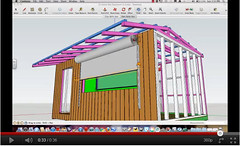
 The smart shed design

The CAME project was mentioned as a shift in the teaching and learning paradign, and the final project was social learning technologies. Staff actually experienced Web 2.0 on this programme, and then explored the tools in their own context (see here for more detail).


Enhanced by Zemanta

Monday, December 5, 2011

Equipping lecturers for the iRevolution: iPads in action

English: iPad tabletImage via Wikipedia
James Oldfield presented on a project that both he and Thom Cochrane have been working on at Unitec. James started with a bit of an overview of the background to the project, especially around the question "what is the iRevolution". Thom and James started with a pilot using the iPads with James's students, and learned a lot which they have fed-frward to the subsequent projects.

The projects were underpinned by the affordances of mobile learning, as well as social constructivism and communities of practice. Previously students have struggled with the small screen size with mobile devices (Sharples, Taylor, & Vavoula, 2007), but with the iPad this wasn't an issue. It was important that the staff as well as the students were using the iPads. Like minded peers with a common interest were encouraged to work together (Wenger, 2005), and James took on the role of the Technology Steward (Wenger, 2005).

The Community of Practice (21 staff from two business departments - approximately 50% of the staff overall) were equipped with iPads, and the initial trial was followed by the permanent allocation of the devices for staff. This was an optional project and yet there was still a good turn out to initial sessions during the holiday periods. James developed a Moodle course to assist staff to work with the iPads. The Moodle course offered a place for community, access to a glossary of apps, as well as a one stop shop for trouble shooting. The results was the gradual development of capability, which could be seen by, for example, staff posting to the glossary of apps.

iPad!Image by beatak via Flickr
The overall results illustrated that the staff involved, even though they had started from a relatively uninformed position in relation to familiarity to the technology, they had definitely increased capability. Feedback indicated that the iPad is useful for many tasks, and now prefer to use their iPad to their laptop, which remains in their office.One area was highlighted by the following comment "Infrastructure is the problem. The other thing is the cost side, and you compare with the sort of student5s we have in terms of affordability. Or is ti freely available?". This has yet to be fully addressed at the institution.

The affordances of the device really appealed, and for most the iPad acted as an encouragement to look and consider a range of possible pedagogical changes. The duration of the initiative has also proven important.

The level of engagement has been high, and it is interesting that in this project the team has started with the tool rather than overtly with a focus on the design of the programme of learning, and integration with the alternative approaches into the curricula.

Enhanced by Zemanta

Tuesday, November 8, 2011

Belonging, becoming and being: First-year apprentices' experiences in the workplace


If you have not heard of Selena Chan and the work she is doing in the Vocational Education and Training sector - especially around the use of mobile learning - then this report is a must: Belonging, becoming and being: First-year apprentices' experiences in the workplace (downloads as a .pdf).

The description from the Ako site reads: "In this report, the perspectives of first-year apprentices (both continuing and discontinued) and pre-trade student are studied to explain the factors influencing young peoples’ decision to commence and continue with apprenticeship.
Apprentices and pre-trade students from 7 industry training organisations (ITOs) encompassing the primary, infrastructure, manufacturing and service sectors participated in this project. Data collected from focus group and individual interviews were analysed using case study methods to derive findings based on first-year apprentices’ experiences.
The study’s findings include:
  • the need to help individuals match their ‘vocational imagination’ with the workplace realities;
  • that support is required to help novices establish a sense of belonging to a workplace; and
  • assistance is required to maintain engagement and momentum for apprentices’ eventual completion of apprenticeship and qualifications".
(Source)

Tuesday, September 28, 2010

eLearning attributes of mobile devices with an emphasis on smart phones and the iPad (Peter Looms at Sharefest)

Peter Olaf Looms opened this session about the attributes of mobile devices, smart phones and iPads with a suggestion that the wait and see approach is an approach but perhaps not the most positive! Do we want to be reactive or proactive? Normally the lead in time for significant developments is a couple of years...things never stay stationary.

A quick overview of mobile technologies and their use was followed by a more in-depth description of some of the uses. So, for example, Peter mentioned that iPads are often used by groups of people (3 or 4 in a group) because the size of the screen is conducive to sharing. However, the smaller device can be more convenient in some circumstances where you might not want to be conspicuous.

Wallace and GromitImage via WikipediaLaptops are seen as work devices, and iPads are not in the same league as far as the range of functionality is concerned - but the aim / use of the devices is ultimately different. There seems to be a lot of focus on products that are based around TV programmes that parents and children can interact through and with (e.g. Wallace and Grommit). Will the iPad replace the picture book? Does it empower the child to interact more (listening to a story can be pretty passive, but don't children interact actively while engaging with a picture book?

Thinking about media consumption per week (e.g. watching TV, playing console games, watching videos and DVDs) surveys can be misleading as there is either social taboos around some media consumption, or the person is truly unsure how much time they spend (an hour may pass in what seems like 5 minutes). There is a wide range of devices that young people use, but they may not have all the3 skills necessary to use them in ways efficacious to learning.
iPad with on display keyboardImage via Wikipedia
Enhanced by Zemanta