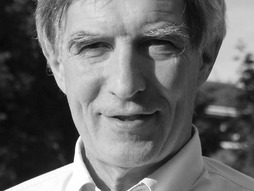
I listened to this presentation from the point of view of an educationalist working in a system that is currently broken. The education system in general is being blamed for not addressing (or even is seen as creating) many of the ills of societies and communities in a range of countries around the world. However, what Richard Wilkinson presents tends to suggest that policy makers are focussing on the wrong things. While education may not be meeting the needs of traditionally underserved students, the issue is way bigger issue, and the broken education is arguably a symptom not a cause. Education is seen as tangible and in a sense knowable and definable, and thus fixable, whereas addressing economic inequalities across the board for an entire country is practically and philosophically untenable. So what's the answer? I'm not sure but would recommend you watch the video, and would love to hear your thoughts
The blurb from the TED site reads:
We feel instinctively that societies with huge income gaps are somehow going wrong. Richard Wilkinson charts the hard data on economic inequality, and shows what gets worse when rich and poor are too far apart: real effects on health, lifespan, even such basic values as trust.
In "The Spirit Level," Richard Wilkinson charts data that proves societies that are more equal are healthier, happier societies.
For decades, Richard Wilkinson has studied the social effects of income inequality and how social forces affect health. In The Spirit Level, a book coauthored with Kate Pickett, he lays out reams of statistical evidence that, among developed countries, societies that are more equal – with a smaller income gap between rich and poor -- are happier and healthier than societies with greater disparities in the distribution of wealth.
While poverty has long been recognized as an indicator for such social ills as crime, obesity, teen pregnancy, Wilkinson and Pickett have demonstrated that societal well-being bears no relation to per capita income. They’ve also found that the symptoms of inequality trouble all levels of society. Across the board, mental health, levels of violence and addiction, even life expectancy are affected by the psycho-social stress caused by income gaps and status anxiety.
In the UK, The Spirit Level won support from politicians both left and right. Wilkinson, who is Professor Emeritus of Social Epidemiology at the University of Nottingham, also co-founded The Equality Trust, a nonprofit that aims to reduce income inequality by educating and engaging the public while supporting political commitment to address the problem.
He says: "While I'd always assumed that an equal society must score better on social cohesion, I never expected to find such clear differences between existing market economies."
.


 Posts
Posts


