Showing posts with label culture. Show all posts

Thursday, October 5, 2017

How do you support people to build their cultural understandings?

Coaching, with its focus on listening, questioning, and exploration of self, especially values and beliefs, can be a highly effective way to develop understanding of a range of cultures. Such understandings have a positive impact on a person’s own - and where coaching is used throughout a business - all employees’ ability, to comprehend differences in communication and how professional relationships are formed, as well as alternative relationships with different concepts of ‘time’, rules, hierarchy, negotiations, humour, and so on.
The supportive environment that is developed by coaching provides a safe space for employees to grow their skills and build strategies for working together. In turn, this can help with short- and long-term business development, especially around decision-making, planning and operations. Some of the benefits include the:
  • Enhanced ability to meet the needs of a culturally diverse range of clients through employee cultural knowledge  (Australian Multicultural Foundation, 2010), and an associated reduction in complaints / grievances.
  • Improved knowledge, understanding and relationships with culturally diverse market segments (Australian Multicultural Foundation, 2010).
  • Reduction in employee turnover.
  • Enhanced sense of inclusion, cohesion and productivity amongst employees.
  • Enhanced reputation as a business, and as an employer, with culturally diverse communities (domestic and international) (Australian Multicultural Foundation, 2010).
  • Increased customer satisfaction and number of referrals  (Australian Multicultural Foundation, 2010).
  • Lower costs and higher profitability.
  • More effective communications and marketing (Australian Multicultural Foundation, 2010).

Reference

Australian Multicultural Foundation. (2010). Managing Cultural Diversity  Training Program Resource Manual. Retrieved from http://amf.net.au/library/uploads/files/MCD_Training_Program_Resource_Manual.pdf

Image

Challenging Stereotypes. CC ( BY NC ND ) licensed Flickr image by Jake Brewer: https://flic.kr/p/8usR2

Wednesday, August 16, 2017

Cultural competence...what it might look like in reality

Given the opening up of the world and a shift to globalisation, it is important, especially in business contexts to be culturally competent - to be sensitive to differences and know how to work within a multicultural context.
The following is a brief vignette (based on experience, but using fictional characters) of how the Geert Hofstede’s 6D model is one of the many tools that can help raise awareness, and start discussions.

The vignette
Together, Shuyi who was born and raised in Beijing in China, and with whom I work closely in New Zealand, have found Hofstede’s model a useful way to open conversations about how we can best work together that respects both of our cultural preferences.
With China, according to Hofstede’s model:
  • Power distance (attitudes of culture towards inequalities): China comes in at 80 (NZ is 22), signalling a society “that believes that inequalities amongst people are acceptable” (Hofstede, n.d.). In a workplace this means that the relationships tend to be polarised between managers and their team members, formal authority has great influence, and there is optimism about employees’ capacity to use their initiative and lead - but to also not have “aspirations beyond their rank” (Hofstede, n.d.).
  • Individualism (the degree of interdependence a society maintains among its members): With a score of 20 (NZ is 79) China is a strongly collectivist culture. In the workplace this means that there is an expectation that “hiring and promotions with closer in-groups (such as family) … [get] preferential treatment” (Hofstede, n.d.). People do not tend to be committed to a company, although there is a tendency to form close cooperative groups with possible hostility shown to other groups.
  • Masculinity (levels of competitiveness, achievement and success vs liking what you do): At 66 (NZ is 58) China is a Masculine society, which means in a work context that there is a drive to succeed, often meaning long hours and little focus on breaks or leisure time.
  • Uncertainty Avoidance (how cultures feel about ambiguity and the unknown): China, at 30 (NZ is 49), scores low on Uncertainty Avoidance. In a business setting, Chinese employees are usually comfortable with ambiguity, and tend to be “adaptable and entrepreneurial” (Hofstede, n.d.).
  • Long Term Orientation (attitudes to the past, present and future): With a score of 87 (NZ is 33), China has a very pragmatic culture, where traditions can easily adapt to changes in context. In the workplace, Long Term Orientation translates to perseverance to achieve results over time, as well as a focus on saving.
  • Indulgence (control of desires and impulses): At 24 (NZ is 75), China is a restrained society. In the workplace this may be expressed as cynicism or pessimism, and employees may see that indulgence is not a positive behaviour.
Looking at the scores, while Long Term Orientation shows the biggest numerical distance (meaning that there may be misunderstandings around the Kiwi focus on ‘quick results’ and short-term gains), the most useful for Shuyi and I was Power Distance. I had noticed Shuyi rarely said much in meetings, and hardly ever contributed ideas or suggestions in the shared Google Docs - and yet I knew from our discussions, she had a lot to offer!  After I shared the results of Hofstede’s model with her, we talked about some of our assumptions. Shuyi felt it was rude for her to jump in with ideas (particularly alternative perspectives) during meetings, especially if the team leader or one of the really experienced team members was speaking. On the flip side, I had assumed that she just wasn’t keen to share - and I knew that other people in the team felt that she wasn’t really interested in being active on our projects. However, we were able to talk things through and discuss strategies such as me asking for her ideas directly during team meetings or in the Google Docs (but not all the time or too obviously), or providing signals such as a direct request for input. We both hope to continue the conversation!
In conclusion...
While these solutions are relatively surface and may not work for everyone, the key here was the fact that awareness can support folks to ‘have the conversation’ - and Hofstede’s model (or similar tools) can offer a ‘safe’ way to recognise differences.
Image
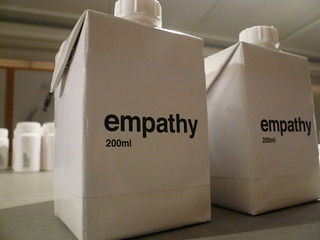
Empathy, CC ( BY, NC, SA ) licensed Flickr image by James Box: https://flic.kr/p/4ZJwhw

Monday, November 26, 2012

Designing evaluation and research into edcational initiatives

College of Health Sciences Summer Research Program
College of Health Sciences Summer Research Program (Photo credit: Marquette University)
Jo-Anne Kelder, Juliette Sondermyer, Rob Phillips and Anne Rothwell presented this session where they introduced the Global Perspectives programme and the associated case study design and findings. The project was based around developing a programme that would be embedded into the first year units offered by the Faculty of Health Science.

The pilot programme was used to inform the research design. The programme is not yet online, and the first 2 phases have provided quite a lot of data, and they are ready with phase 3 where they will be working with 2013 students.

One of the recommendations was to have a supportive system in place when designing research, especially when using an existing framework. In this case, the author mentored the researchers through the process. There were some issues about applying the framework from a book, including an alternative focus, and idealised versus actual phases of research. The mentoring role was extremely important.

It was an interesting paper, especially the way that the presenters identified some of the positives and issues around their approach, but the real bonus about having the author as a mentor. I would have really liked to have seem some of the emerging themes and findings, and will watch with interest.
Enhanced by Zemanta

Wednesday, August 22, 2012

Māori and Pasifika learners: To make change it has to be a tide rather than a wave

ASB Polyfest 2008 Avondale College Samoan Group
ASB Polyfest 2008 Avondale College Samoan Group (Photo credit: Richard Sihamau)
Today (22nd August 2012) I was privileged to be a part of a webinar "brought to us by the VPLD project", discussing some thoughts around working with Maori and Pasifika learners (recording can be accessed here).

The session was opened with a traditional Maori waiata being played of Whirimako Black singing E Kumara about sharing the goods, treasuring things important. Merryn then greeted everyone and shared some of the different ways of offering greetings in Maori and Pacific languages, and then offered the following whakatoki:
Na to rourou, na taku rourou ka ora ai te iwi
With your food basket and my food basket the people will thrive
A slide from Waikato University (2003) was introduced, that looked, from a Pakeha perspective, the Maori pedagogies. Other factors that were mentioned, including those on a diagram by Peta Sharples and his team.

ASB Polyfest 2008 Ruderford High Maori Group
ASB Polyfest 2008 Ruderford High Maori Group (Photo credit: Richard Sihamau)

Heather started by speaking about one of the students with whom she is working, and spoke in particular about the content of this video. This student feels as though that her Maori language is her strength, and that by using the language was a way of showing respect, and by showing respect to her culture she indicated that you "show respect to me". Heather went on to describe the conversations that she has been having with colleagues, as well as (perhaps more importantly) the students. "It was like opening the floodgates...why haven't we been doing this all along? This is the way I can connect with my students." She also said that it pushed it out of her comfort zone as she was worried about causing offence, feeling inauthentic - especially with her Canadian accent, and other concerns. However, she persisted, and set herself the learning objective (that she shared with her students) "How do I incorporate Maori language into the classroom", and now she is finding that her students often support and guide her in her learning journey. She gave a lovely example of one student who created a PowerPoint with language she feels Heather should know! Heather is now finding that students are dropping in to her classroom and she is finding out more about their families, and feels that the response is because she is meeting them within their own culture. There was also an example about how a student has really started to engage since Heather has acknowledged him 'authentically', and he is now becoming more involved in class. There was some neat follow up discussion after Heather's contribution, especially around respect, and relationships.

A himene was played, and Merryn explained why it's culturally responsive to include such songs, and recognising the importance of protocols. Vicki mentioned that she has students other than Maori and Pasifika including "a Sri Lankan girl, a Hindi girl and another who is Jewish and Korean in descent. Provides lovely variety for the building of tolerance and understanding of others that are different".

Marg talked with enthusiasm about a range of amazing initiatives that she is working on with the students, school and community, and showed a prezi which illustrated many of things the students are doing at Ashburton college (with 1200 students where 6% are Pacific Islanders and 11% are Maori. They have one specialist ESOL teacher at the school and they are lobbying for more. They have a working group who are working toward providing support for the Pasifika students. Students are being encouraged to step into the leadership spaces - especially important where the community members work long hours, and awesome for the students who stepped up to take on the roles as cultural leaders. One example was where the students have created a homework space for the community to study after school, that is warm, dry and welcoming. At the cluster meetings they share data, ideas about the issues as they see them, and have conversations around how they can start to help each other outside the parameter of a single school. Marg described the excitement (and successes) at Polyfest 2012. There are some wonderful things also underway such as reading mentor groups, which are proving to be incredibly popular...and effective. The community supports the reading groups to provide food and reading materials.

It was wonderful to hear about the incredible initiatives that are coming from the heart; ideas, and strategies that encourage students to step up and be heard, who are shown respect, and who grow while leading and teaching - "to make change it has to be a tide rather than a wave" (Merryn). So who is also trialling such initiatives? Please share experiences and ideas.

You can access a copy of the recording of the session here, as well as Marg's Prezi here, and Heather's video here.

Enhanced by Zemanta

Wednesday, July 27, 2011

The Virtual Revolution - Homo Interneticus

Clarence Yates shared this prodigious post with another community we are both members of, and has kindly agreed to share it with the Ethos community. He has watched all of the 5 documentaries that he links to, and pulls out the key points from them all.

Who is this "Homo Interneticus"? This being exists due to “The Virtual Revolution.”
In a recent documentary titled The Virtual Revolution presented by a Dr Aleks Krotoski looks at how the World Wide Web is transforming every aspect of our lives. It also looks at the popularity of social networks and asks how they are changing our relationships. When I look at what we are doing in VPLD and the on line learning that we are all involved in then this documentary and the points it raises have relevance to us and especially the students we teach both now and in the future.
The Virtual RevolutionImage via Wikipedia

Virtual Revolution Video 1 of 5 Length 10:58,
Virtual Revolution Video 2 of 5 Length 9:37,
Virtual Revolution Video 3 of 5 Length 10:55,
Virtual Revolution Video 4 of 5 Length 10:67,
Virtual Revolution Video 5 of 5 Length 9:46

Summary: You may add adjust or correct the following
  • Johannes Gutenburg Printing Press 1450 churning out books
  • 500 years later on a leap- Information still distributed and shared however the big difference is that anyone can create information.
  • 20years World Wide Web that created extraordinary access to information, yet to understand the impact it will have on our psychology. The effect and consequences on our relationships and on our brain
  • Web effect on human beings then look at South Korea
    www,domain,internet,web,netImage via Wikipedia
  • South Korea the most wired nation and in this world most digitally enhanced country, 62% 3 to 5 year olds use net at 8hours per week that is twice that to the British. Internet addiction. Cases reported of 18 hours on line each day
  • Offers a glimpse on our future
  • Distorting students sense of reality
  • Unease at students growing up in life on line
  • Generation Web-Centered around computers
  • Quotes from a family Using Chat-Face Book
  • Communicate and look into other peoples lives
  • Before web life was boring. What do you think they did before this-Read books
  • To take away this will be like removing an arm
  • Two telephones can make only one connection, f...Image via Wikipedia
  • 10,000 hours on line before reach adulthood
  • Bebo, My Space and Face Book the largest
  • If Face Book was a country it will be the 3rd largest
  • Key criticism of FB makes friendship meaningless and how true is this
  • Have to understand why FB became so popular
  • FB trying to achieve a Network Effect. Theodore Vail The Network Effect
  • Comparison to the telephone-one by itself useless, however, add another then another and so on leads to more people to connect with then more people want to join.
  • Self sustaining and self fulfilling
  • Scale leads to scale
  • Value of FB friends
  • Is social networking changing how we have friends or not to be able to change our concept of friends
  • Primate study on social bonding 50 to 60
  • Dunbar bonds made can have Upper limit known as the Dunbar's Number 150. Seen all over human communities
  • Has FB changed this limit of friendship
  • However Nature is playing out as the average number is well below 150 and usually 5 to 6 in direct contact with each other
  • So Face Book not changing our relationships Dunbar's Number and Face Book
  • So something deeper is going on with relationships
  • Relationships in the loop
  • WW2 Anti aircraft study on overcoming the problem of missing their targets-Solution to this was the Loop
  • FB innovated use of the Loop
  • FB pioneered status update in real time
  • A technical solution to social problems
  • While web made information available people not aware it is there so Mark Zukerburg completed the Loop using News Feed
  • Anything posted onto your site went automatically to others and vice versa. Culture of real time updating and being in the loop and not the number of friends
  • Big shift in relationships
  • Inspired imitation such as Twitter
  • Initially feedback to this was mostly negative
  • FB stuck to the loop
  • Real time updating in the loop rather then number of friends
  • Time on my own increasingly rare with online content both created and consumed
  • Living in the loop slowly drowning
  • Deeper change in how to use our brain in a different way
  • Technology and the mind to work together
  • Sherry Turkle
  • relationship to technology Web feedback
  • Web is like an exciting, innovative metropolis for our young people
  • Extra ordinary vision in 1945 with an article published by Vannever Bush As We May Think where he identified Information Over Load
  • He did not think our minds to be linear rather associative
  • Linking information introduction of the web
  • Hyper linking does it make us lazy
  • Web Keeps our brain hopping and jumping
  • Stops concentration
  • Growing up expecting to be able to find information at a moments notice and what does it do to internalize information
  • Question Are these just grumblings of an older generation?
  • We used to be trained in Linear Thinking-Reading and Writing
  • Even at University level get the reaction how much reading do we have to do and how long do we need to read this book?
Illustration of Facebook mobile interface
  • Skipping over the virtual sites, not staying at one site for long
  • Linear Like hedgehogs like 1 idea, repeat and go back to the same source. Enjoy the peer evaluation environment
  • Associative like foxes embrace all kinds of ideas pick things up bounce here and there
  • Are young people becoming more fox like? The 12-18 year age group especially as they only know life with the web
  • Evidence web changing our thinking
  • Professor David Nicholas 40% people never visit the same web page again
  • Hyper linked web of information converting us from thinking literally to associatively
  • Confirm that Gen. Web are more fox like, remodeled by the web information over load associative thinking
  • Society always looks back at the preceding age not the one we are li ving in.
  • In the 1960s predicted real time chat Marshall McLuhan
  • Measure new media by old media
  • Compare to passively consumer type i.e. movies and sitcoms a waste of time as compared to say You Tube. Creative, Sharing rather then just a visual production Brings more people in
  • Viral culture people much more engaged
  • Direct impact on the world
  • You Tube My Space Twitter FB
  • Impact in Politics Gen Web engaged done it and done it differently
  • Feedback Loops
  • Associative Thinking
  • For better or worse using web
  • Being used by young people today
  • Power of the web to connect and collaborate
  • Positive impact is that collaboration is the key driver of human progress
  • Back to South Korea
  • Regularly tops World League Education Tables
  • especially in Mathematics and Science
  • Not only due to the Education system but connected to the web
  • At an early age interact and work together
  • Claim that the Gen Web will be more intelligent when compared to the older generation
  • Recognize the importance of communication and helping each other solve problems.
  • Collective intelligence
Enhanced by Zemanta

Wednesday, December 15, 2010

Reading deeply: A Sociocultural approach to an audio-visual 'text'

This activity is designed to develop students critical reading of text, in this case of a cultural, audio-visual text. Alternatively, a traditional, printed text could be used. However, the texts students need to read are becoming increasingly complex and hybrid, requiring a range of multi-literacies.

The resource was designed for certificate in music students at level 3 in response to diagnostic testing (and in-class observation) that indicated critical reading and critical thinking to be significant literacy needs of these students. Developing students critical literacy skills is essential in all disciplines, at all levels; for this reason, this activity is useful, and adaptable to a wide range of contexts. At higher levels the texts and tasks need to increase in complexity and need contextualising to the discipline, but the skills and strategies remain the same.

The music in the video was: "Harmony", by Mseq, 2010 - Licensed under Creative Commons Attribution (3.0)
Formats available: Microsoft Video (.avi), MPEG-4 Video (.m4v)
Enhanced by Zemanta

Wednesday, February 11, 2009

The Machine is Us/ing Us (Final Version)...

A really well produced, thought provoking exploration of literacy in the digital era by Dr Mike Wesch (Kansas State University).