Monday, April 28, 2014

In spite of everything: Learning against the odds

Students; captivated by a movie of themselves
Barriers are often thrown in place when eLearning is mentioned. Access, cost of owning a device, safety...the list goes on. However, when solutions are sought to issues, rather than accepting what may appear to be the insurmountable status quo, learners can take things way further than educators may imagine.

Sugata Mitra (whose video is included at the end of this post) is one such person. Sugata addressed a wide range of issues to put in place an initiative that had many nay-sayers. The ‘Hole-in-the-wall’ initiative is now widely known, as are the results. By addressing issues that were pretty much insurmountable for the local children, Sugata empowered young learners to figure out the technology by themselves, and in turn opened up a world of learning to them. These learners were able to creatively select, evaluate, internalise and externalise the information they found online and own it as ‘knowledge’.

Learners teaching learners

English: Students learning arithmetic. Locatio...
Since the first initiative Sugata’s vision has emerged as a global one where he calls for the development of cloud based schools (see video below) and a Self-Organized Learning Environments (SOLE). (You can find out more about SOLE and download a toolkit at the TED site.) What is more, Sugata has, through social networking and the ubiquitous nature of the Internet, inspired learners and educators around the world.

What this can look like in a school facing ‘barriers’

One such example; I was inspired by a story shared by Helen Martin toward the end of last year: How a Radical New Teaching Method Could Unleash a Generation of Geniuses. I had read it before and it had stayed in my mind, so re-reading it was a reminder as to why it had been so powerful the first time around. Imagine you are a student or educator at the following school:

The school serves residents of Matamoros, a dusty, sunbaked city of 489,000 that is a flash point in the war on drugs. There are regular shoot-outs, and it’s not uncommon for locals to find bodies scattered in the street in the morning. To get to the school, students walk along a white dirt road that parallels a fetid canal….Some people here call the school un lugar de castigo—“a place of punishment.” (source)

And then consider whether you might have moved from teaching “the government-mandated curriculum” that you feel is a “a waste of time”, to start researching and trialling different approaches that could empower and engage your students. Sergio Juárez Correa was one such teacher. Inspired by a video describing the work of Sugata Mitra. One of the first things Sergio did was group the desks and sit down to learn with the students - he also set the expectation with his students that they had potential, and that they could rise to this potential.

For the study of maths Sergio Juárez “began experimenting with different ways of posing open-ended questions on subjects ranging from the volume of cubes to multiplying fractions”. The resulting collaborative learning was “noisy, [and] slightly chaotic….the opposite of the sort of factory-friendly discipline that teachers were expected to impose. But within…[a short time], they had come up with the answer” (source).

The next step was to implement Sugata’s suggestion that children learn most effectively when they have access to the Web - not an easy task in the environment Sergio and his students worked in. Unfortunately, there was no resource for the school to access to the Internet directly.  “As a result, Juárez Correa became a slow-motion conduit to the Internet. When the kids wanted to know why we see only one side of the moon, for example, he went home, Googled it, and brought back an explanation the next day” (source).

The results?

“The previous year, 45 percent had essentially failed the math section, and 31 percent had failed Spanish. This time only 7 percent failed math and 3.5 percent failed Spanish. And while none had posted an Excellent score before, 63 percent were now in that category in math” (source).  Also incredibly exciting was the fact that one of the students, Paloma, achieved “the highest math score in the country, but the other students weren’t far behind. Ten got math scores that placed them in the 99.99th percentile. Three of them placed at the same high level in Spanish” (source).

International Student Orientation 5
   
 Interestingly, it is reported that Juárez Correa, while pleased that his students had done well, had mixed feelings about the fact that the students “had distinguished themselves because of a conventional multiple-choice test”, indicating that the exams limit the teachers and “test what you know, not what you can do, and I am more interested in what my students can do” (source)

By shifting the approach he was using for teaching to one that was focused on group work, creativity, and a student-led environment, his students thrived and grew, and that was what interested him. Not their achievement in standardised tests. Sadly, nothing has changed in the way of support or funding. Francisco Sánchez Salazar, chief of the Regional Center of Educational Development in Matamoros, is quoted as saying that “Intelligence comes from necessity” and that the students “succeed without having resources” (source).

Take aways?

Come with Us/The Test
This is a post that has been a long time in the writing, and I think, in part, it’s because I was trying to make sense of what the key take aways are - without being reductionist. There seem to be several things at play here:
  1. Students can learn even when faced with issues such as lack of resources and funding
  2. Regardless of location and education background, given time and access to basic resources, many students will grasp any possible opportunity that comes their way to learn...they are curious, applied and filled with wonderings. Often, these students will help each other to learn.
  3. Many students learn well when encouraged to be creative, collaborative, and to take ‘ownership’ of the learning
  4. Teachers who are global in their outlook, and self-directed in their own professional development and inquiry, can make major shifts in their own practice if they are open to changing their role and beliefs about how people learn
  5. National standardised testing appears to be something that restricts, and possibly even negates, 1 to 4 in the list above.
I wonder then, when there will be fundamental shifts in the way we test whether the education system is working - given that it appears that the testing itself is possibly undermining the system.

Images

  • International student. CC licensed Flickr image by Penn State: http://www.flickr.com/photos/53130103@N05/4947783158
  • Veda Pathashala students learning. CC licensed Wikimedia image by Rhariram: http://commons.wikimedia.org/wiki/File:Veda_Pathashala_students_learning.jpg
  • Come with Us/The Test. CC licensed Wikipedia image by Chemicalfire 07: http://en.wikipedia.org/wiki/File:Come_with_us_the_test.jpg
  • Students; captivated by a movie of themselves. CC licensed Flickr image by eltpics: https://www.flickr.com/photos/54942754@N02/6711545545
 
Enhanced by Zemanta

Thursday, April 10, 2014

Dropping the ball to remain productive: Top tips for coping with emails

Scott Hanselman has written a post, shared by the wonderful Glen Davis, with a wealth of ideas around how to manage your email...and your ever growing to do list. One of the key things for me were the the "Four Ds" that Hanselman uses (from David Allen's Getting Things Done manual):
  • Do It
  • Drop it
  • Delegate it
  • Defer it
The 'drop it' one looked particularly useful, and Hanselman encourages the practice of 'dropping the ball'. He writes that "though this sounds irresponsible, this will lead you to feel better about yourself as you'll be better able to focus in on your work rather that juggle responsibilities". In the post he offers some suggestions around how best to drop the ball without miffing the people with whom you work!
Glen notes that Hanselman's post "summarises quite well some of the key strategies for getting on top of email and being productive". He then goes on to say that "Of course reading this email, and then reading the following post will destroy your productivity goals for the next 15 minutes!"
Hanselman's post in full can be found at "Complete List of Productivity Tips".
Image: 'No Strings' . http://www.flickr.com/photos/21981149@N04/3336227189. ;Found on flickrcc.net.
Enhanced by Zemanta

Thursday, March 20, 2014

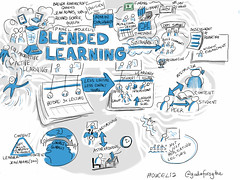
Blended learning: The proof of the pudding

While blended learning** has been around for a while now, it is often the benefits*** that are focussed on rather than some of the issues (including an increased workload for facilitators, technological problems, and poor communication - Garrison & Vaughan, 2007) that providers of blended learning need to be aware of up front, and how these might be addressed to maximise the benefits for learners.
The Blended Learning Synchronous Learning project aimed to "identify, characterise, and evaluate technology-enhanced ways of bringing together on-campus and geographically dispersed students and engaging them in media-rich synchronous collaborative learning experiences" (source). As a result of the project, 7 case studies have been developed that "provide a better understanding of the issues that impact on the effectiveness of blended synchronous learning, which in turn can be used to enhance the practice of educators" (source), while also providing "practical guidelines for staff" (source).

The case studies

I'd highly recommend dipping into these case studies if you are already involved in facilitating blended learning, or are thinking about it:

Footnotes

** Heinze and Proctor (2004) define blended learning as “learning that is facilitated by the effective combination of different modes of delivery, models of teaching and styles of learning, and founded on transparent communication amongst all parties involved with a course” (p. 21)
*** Garrison and Vaughan (2007) go on to identify a variety of benefits for learners including:
  • increased student use of course resources outside face-to-face sessions;
  • opportunities to apply skills, concepts, and theories in authentic contexts;
  • opportunities for self-directed learning;
  • integration of online and in-class learning; variety of assignment / assessment types and formats;
  • flexible access to interactive tools and resources that meet a range of learner needs; and
  • further peer to peer interaction and critical dialogue. (Adapted from Garrison, & Vaughan, 2007, p. 35)  

References

  • Garrison, R., & Vaughan, N. (2007). Blended learning and course redesign in higher education: Assessing the Role of Teaching Presence from the Learner Perspective. Retrieved May 12, 2007, from http://www.ucalgary.ca/
  • Heinze, A., & Proctor, C. (2004). Reflections on the use of blended learning. Paper presented at the Education in a Changing Environment, University of Salford, UK. Retrieved June 10 2005, from the Salford University Web site: http://www.edu.salford.ac.uk/her/proceedings/papers/ah_04.rtf.

Image

Enhanced by Zemanta

Wednesday, March 12, 2014

Make sure you have more than one inspiration: Finding Balance

Finding balance between life and work is an ongoing challenge for most people. Today's webinar (facilitated by Dave Burton, Heather Eccles, and Vicki Hagenaars) was designed to provide some tools and practical suggestions for thinking about how we can work toward achieving some sort of balance.

The model is designed to shift us from inspiration to reality, and rise to the challenges that will help us fulfil the things you are inspired to do.

Map of Meaning: A model

The key model discussed was the Map of Meaning (originally developed by Marjolein Lips-Wiersma, Lani Morris, and Patricia Greenhough). The tool was unpacked during the session and stories shared that opened discussion to help us find ways to recognise and value how we balance the demands of life and work - from reality to inspiration. Some of the key areas of behaviour were:
  • Developing the Inner Self – Developing oneself and one’s resources. 
  • Unity with Others – Building and maintaining relationships. Dave suggests that there is less and less time at work to 'chew the fat', to build relationships.
  • Expressing Full Potential – Promoting or representing oneself, taking oneself to market. One element of this is "exercising one's mark and putting it on the table so that others can hear it and respond to it. For example, a head of department needs to be aware of what you have done". 
  • Service to Others – Delivering the goods. This one has "much more of an action to it. Doing what one says one will do. It's rather more practical and involves doing the things and getting the results".
The top two are more about being, and the bottom two are more about doing.

Several participants indicated that "I don't find it easy to promote myself. I am much more a team player", and "I don't promote myself to any great extent either so I can sympathise and empathise!". This led to a discussion about the discomfort many people feel 'putting themselves out there' and promoting ourselves, but the positive outcomes that can come about when you take the plunge are well worth facing this discomfort. Gaylene indicated that she finds it easier to talk about her strengths when they are framed within the notion of what other folk think about you. Heather suggested that " I find another less scary way to promote yourself is to suggest what you think - and ask for feedback - as a learner". Lorraine observed that "Relational trust is huge. This is one of the barriers students have with anyone in our community". Another interesting question was posed " Also, what spaces do schools create for staff to shine. We have this ideas that often the answers are in the room - but do we give staff a platform for their voice?".

How do we know when we have done enough to stop? Our jobs are about serving others, so actually getting to a guilt-free spot about doing some of these other things can be challenging. There was a lively discussion and sharing about the impact on health when expectations at work are seen as unreasonable. There was mention of "running myself ragged", "overdoing it", feeling replaceable and disposable by employers. One of the strategies that was mentioned was shifting the stress and feelings about these types of things allows you to be more comfortable with yourself, and promote what you are capable of. This serves self and community, and also increases confidence.

One participant shared that "I put in way too many hours into my job. I don't really find a lot of time to fit other things in and I find my job all-consuming". Dave said that "I know from my own experience that getting locked into any of the quadrants is a recipe for burn-out. So, it's not so much 'can I afford to spend time in the other quadrants', rather it's a case that 'can I afford not to'?". Another strategy that Dave mentioned was thinking about other things that inspire you outside of work..."it's having those inspirations that motivates you and brings more of the balance". Sometimes you need to focus away from goals, and go back to inspirations.


Vicki's experiences

Vicki shared some of her experiences as well as some great images to illustrate some of the points she made. For example, she showed a lovely photo of herself that was taken before she went to her first eFellow session, and how it feels as though it was "a huge risk", and in some ways "not deserving of some of the accolades that are already starting to come". Vicki emphasised that looking after herself holistically is also hugely important, and she described some of the strategies that she has undertaken since starting to think about the map of meaning. These include going to the gym, spending time outside, and with her family. Some of the health benefits have been huge as the stress levels have reduced, and the family feel as though they aren't encroaching on work time.

Heather experiences

Heather described that the personal and professional are inextricable, and since using the map of meaning she has felt energised, excited, and keen to go to work. Recently she has also had a baby, which has re-defined her life, and she is trying to build a relationship with her new son and "with other new mums". In another sense she is feeling disconnected from her professional community, so she is using social media extensively to help maintain these relationships. Heather talked about the first time she 'took herself to market'. She was petrified beforehand, but the Iginite session she gave went well, and she got great feedback, which was a taste of some of the positives of putting yourself out there.

Cultural dimensions of self-promotion

Madeline asked "is there a cultural dimension that impacts self-promotion??", and Heather responded "Good point Madeline - I'm thinking of Pasifika communities where the collaborative is huge and the individual not valued as much", and Rosey suggested that "I guess it depends on the individual. For some people, the cultural aspects are very important".


This was a super presentation with some incredibly valuable opportunity to reflect, share and recognise that there are many other folk experiencing the same sense of struggling to find balance. If you missed out on it, please follow up via the recording below.

Questions to consider

You are invited to consider the same questions that were posed during the question:
  1. How’s the relationship between what really moves you?
  2. What’s your self-development strategy and how is it going?
  3. How often are you able to have meaningful, perhaps challenging, conversations with your peers?
  4. To what extent do others understand what you’re really on about?
  5. What sense of being useful in the world (or your part of it) do you have?
  6. Do you get a chance to pause and reflect on how you are going?
  7. Who gets first call on your time; you or those around you?

Missed the session?

If you missed the session you can always access the recording, here:

And you can watch a video about the map of meaning here:


Images


  • Balance. cc licensed ( BY NC SA ) flickr photo by James Box: http://flickr.com/photos/b0xman/2622396232/
  • Balancing lady. cc licensed ( BY NC SA ) flickr photo by Helen ST: http://flickr.com/photos/orangebrompton/224649987/
  • Balance. cc licensed ( BY NC ND ) flickr photo by Neil Lewis: http://flickr.com/photos/nthei/392707302/
  • Identity finders. cc licensed ( BY NC SA ) flickr photo by James Box: http://flickr.com/photos/b0xman/2622403996/

Tuesday, February 18, 2014

Dramatic engagement that leads to understanding complex ideas


Brian Edmiston (from Ohio State University) offered a session at the Te Toi Tupu hui in Hamilton. Brian is a professor of drama in education. He has a focus on both the practical and the scholarly and looks into how we can build engagement at the same time as mediating complex learning. As such, he is studying ways of enhancing learning with active and dramatic approaches – across disciplines. In particular, he aims to encourage higher order thinking and increasing leaners' understanding of complex ideas.

Brian has his roots in Ireland, and now has his home in America. As such, he has a bi-cultural view of the world, and has a good understanding of the differences between dialogue and monologue. In monologue, people and the institutions that give them authority, seem to treat other people as objects that can be used and discarded. Shutting down dialogue because of a sense of superiority is negative. Dialogue, in contrast creates conditions where people can recognise the conditions for people to reach out to one another.

Edmiston, says that "challenging authority is something that children need to learn to do, when it's the "right thing to do". Dialogue doesn't necessarily mean the use of the spoken or written work, but rather it is something that can happen even where there is no shared 'language', but there is shared human experiences. Teachers need to make sure that the conditions exist for dialogue, and Edmiston suggests that this transformation of learning spaces "needs to be honoured and valued; it's never on a test".
The physical space is a fundamental aspect of this process, whereby desks can create barriers. On the other hand, sitting in a circle without physical barriers can open up the opportunity for dialogue and equal contributions - where everyone wants to learn. "In too many classrooms students are bored to death" because they aren't engaged and don't feel empowered to contribute, and do not feel included.

Jack and Jill (nursery rhyme)

Responsiveness to immediate needs is also essential. If a learner has had a traumatic experience, or who has been involved in family commitments, then acknowledging this and giving the person the space is as important as providing opportunities for equal engagement.

Edmiston's second value is "We're all in this together". Shared stories are an important part of learning and dialogue, especially if there is a "big problem" to be solved. It can lead to deep engagement. However, something needs to happen - there needs to be something to solve - "a big problem that we're going to dialogue about".  For example, some of the problems in Shakespeare's Macbeth - "should you do what your wife tells you?", "what do you do if your friend kills someone".

One of the points Edmiston made was that "we must want our students to achieve friendship". He referred to Maxine Greene's words:

Our classrooms ought to be nurturing and thoughtful and just all at once; they ought to pulsate with multiple conceptions of what it is to be human and alive. They ought to resound with the voices of articulate young people in dialogues always incomplete because there is always more to be discovered and more to be said. We must want our students to achieve friendship [and citizenship] as each one stirs to wide-awakeness, to imaginative action, and to renewed consciousness of possibility. (Releasing the Imagination, by Maxine Greene, Ph.D.).

Many of our learners are articulate, but are not much interested in dialogue apart from with their friends. So, shared stories, with problems that students care about, and can dialogue about, can help mediate complex learning. It's about understanding that people can be caught in difficult situations where blurry lines and double binds are the norm.

Edmiston closed by saying that "all we can do is try to understand each other, and try to do our best" - "in dialoguing problems...where no-one is excluded, this gives me hope that vital and transforming events can take place".

Images
  • A French-speaking Canadian volunteer helps two Haitian students with their English. The volunteer was in Haiti with the volunteer group EDV to help recovery efforts after the earthquake in early June 2010. (Photo credit: Wikipedia)
  • Jack and Jill (nursery rhyme) (Photo credit: Wikipedia)
Enhanced by Zemanta

Saturday, January 25, 2014

Why we need to keep asking the questions: Innovation and possible impact on health

For every sizeable innovation there are detractors and advocates. Think, for example, the television in the late 1950s, 60s and 70s. When it initially became available and affordable for many people, was going to open up education for the world (think Open University programmes from the UK, and the City Colleges of Chicago in the US). On the other hand, detractors felt it was undermining literacy skills, amongst other things. Newton Minow, in 1961, called television “a vast wasteland” (you can hear an extract from his speech here).

Hindsight now indicates that TV has not revolutionised the face of education, and people still read books.

The thing is - to have balance, we need both sides, and all the opinions in between - to ensure they are robust discussions about innovations that may, potentially, be game-changers, or harmful. We also need folks to keep re-assessing and re-visiting these discussions - to challenge what can otherwise become assumptions. The danger is that we can blindly assume that what science is apparently indicating is reliable; take for instance, Hormone Replacement Therapy. What initially appears to be a no-brainer positive, can sometimes turn out to be way less cut and dried, and on the other hand, what can appear to be negative, turn out to have some previously un-thought of benefits).

Bearing all of this in mind, this is what I suspect has been happening in the case of wifi. Which brings me to Wifi and tinfoil hats: An evidential approach (a post that was brought to my attention by Glen Davis). Recently, at Te Horo school, on the Kapiti Coast in New Zealand, wifi was recently turned off. It is all somewhat complex, with a number of sides to the story. The end result, though, is that the wifi has been switched off and I am left wondering, to what end?

Paul Matthews, the author of the post, indicates that intensity of EMFs was the key to the debate, and refers to Jonathan Brewer'sInside Telecommunications blog that includes the following table:
Type of Radiation
Power Level
Potential to be Harmful (heat can be felt)
200W/kg
Maximum Permitted in New Zealand
4.00W/kg
Highest Radiation Cell Phones (Avg of 20)
1.43W/kg
50 Watt Cell Phone Transmitter at 10m distance
0.365W/kg
Lowest Radiation Cell Phones (Avg of 20)
0.32W/kg
Wi-Fi Device Average between 0.5 and 2m distance
0.0057W/kg

Matthews goes on to say that if you go by this table, “wifi would have to be 35,000x as strong as its current average to be potentially harmful to humans” (source). He also refers to the World Health Organisation's EMF Project, which has concluded after a review of over 25,000 scientific articles and research projects" that "Despite extensive research, to date there is no evidence to conclude that exposure to low level electromagnetic fields is harmful to human health" (source).

In addition, “the US National Cancer Institute[state that] there is no evidence from studies of cells, animals, or humans that radiofrequency energy can cause cancer” (source). In other words, “Following very comprehensive and ongoing research, there is absolutely no evidence of a link between exposure to wifi transmission and adverse health effects” [emphasis in the original] (source).

So - should everyone be turning off their wifi? It appears not. Extensive research to date is not indicating any cause for alarm. As, the author of the post says, “Hopefully other communities around New Zealand will consider the science first and foremost” (source). However, that’s not to say ‘case closed’. Rather, let’s keep the conversations and the research current and open.

Would be great to read your comments and reactions.  


Enhanced by Zemanta

Wednesday, December 11, 2013

A man who influenced the world: Nelson Mandela

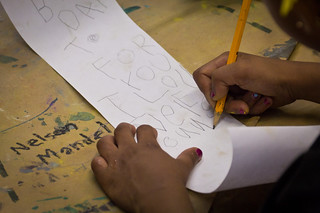
I would like to acknowledge the loss of Madiba - Nelson Mandela. There have been many tributes to his life, and I encourage you to dip into some of them. He was also a great advocate for, and supporter of, education for all, saying that “education is the most powerful weapon which you can use to change the world”.

Nelson Mandela was a fundamental influence to my thinking and beliefs about racial equality, leadership, and standing up for what you believe - even when you may need to pay the ultimate price. He remains an inspiration.

While he is no longer with us in person, his power, his influence - and what he achieved - will live on.
You may want to watch this speech that Nelson Mandela gave at Harvard in 1998. The audio quality is poor, but the speech itself is a testament to the unswerving commitment, as well as the great sense of humour, Madiba had. Highly recommended. 


Image: Nelson Mandela Day at ProjectArt, Harlem. cc licensed ( BY NC SA ) flickr photo by Africa Renewal: http://flickr.com/photos/africa-renewal/7599667424/
Enhanced by Zemanta