Thursday, February 18, 2016

Listening, empathising, and staying on track: Core competencies for coaching

While under discussion between coaching theorists and practitioners, there are some core competencies that most will agree contribute to being an effective coach. These core competencies are the ‘things a coach does’ before, during and after a coaching session, and comprise coaching knowledge, skills, attitude and behaviour (Southern Institute of Technology, n.d.).
I’d like to focus on two competencies that I feel are possibly the most challenging. The first is listening (ICF, n.d.). The ability to listen involves the related skills of active listening and questioning. Active listening also has many different interpretations, but essentially includes three aspects: comprehending, retaining and responding. Going hand-in-hand with active listening is questioning. Questions are part of our everyday lives, and we can’t really communicate without them. Question types that are common include, probing, elaborating, hypothetical, clarification, planning and strategic.
The tough part is being fully ‘there’ while your coachee is speaking, listening for what is and isn’t being said. You also need to be able to understand what is meant within the wider context of your coachee’s aspirations - while also choosing powerful questions to help your coachee express themselves and dig deeper into their area of focus.
Sometimes active listening will also require a coach to leave space for their coachee to download what’s on top, without passing judgement or making comment (ICF, n.d.). Imagine working with someone with whom you have developed a strong professional relationship, such that you care a lot about their welfare. They then share a situation in their professional or personal life that is affecting them deeply. You have to be able to listen while keeping your own opinions firmly off the table, while listening to hear what is being said, as well as hearing the ‘gaps’. You then need to be able to summarise, paraphrase, reiterate, and mirror back (ICF, n.d.) what your coachee has said, and follow up with questions to help them break from a loop of negative reflection to work toward next steps. Sometimes this may require finding just the right questions to support your coachee to move on from the narrative running through their head; toward recognising, for instance, implications of the situation for their own values, beliefs and goals. It is likely to involve bringing the coachee to the point where they identify what they feel is important, and what is and is not possible. You would then need to support their exploration of their own perceptions and concerns, and possibly help them identify alternatives. Ideally, by the end of the session(s) the way forward should be owned by the coachee, who should feel heard, supported, positive, and comfortable about the next steps they have chosen to take.
This is a big ask, and requires empathy rather than sympathy, and for the coach to remain as neutral as they can (non-judgemental) and to constantly check whose agenda is being served by their questions.
The second core competency I feel is tricky, and which is linked to the first one, is to help a coachee manage their own progress (including accountability) (ICF, n.d.). Within this competency is a need to delicately balance attention on what a coachee has identified as important for them, while also leaving responsibility with the coachee to take action (ICF, n.d.). For example, during a coaching session it may be that there has been some great work identifying steps toward your coachee’s stated goals and big-picture aspirations. Your coachee has identified specific action points, considered possible blockers, enablers and sources of support, and put a timeframe around everything. They even ask if they can text you once they have carried out key actions as they feel it will help keep them on track. You receive one text, and then nothing. At the start of your next session you ask about how things are going in relation to the actions that were identified. Then, remaining non-judgemental, you acknowledge them for what they have achieved, and talk through why the coachee feels they haven’t made progress toward their actions. This could involve reviewing the actions based on what the coachee has learned or become aware of since your previous session.
The focus, therefore, while helping the coachee remain on track and ensuring an ongoing sense of positivity, is more importantly about helping them build the skills and strategies to be resilient and self-motivated, such that they carry through with what they say they are going to do, within the time frames they have put in place.

These are both competencies it takes time and experience to hone, and remaining self-reflective as a coach will help develop them. The exciting thing is, when it’s spot on, the coachee can move from a place that seems bleak, to one where, over time, they recognise that the initial situation provided a catalyst for incredible professional growth.
Image: Balance. CC ( BY NC ND ) licensed Flickr image by Neil Lewis: https://flic.kr/p/AGJcy

References


Thursday, February 4, 2016

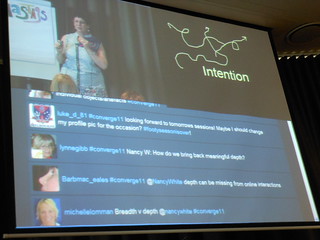
Is a backchannel for you?

I've been meaning to share this resource for ages (and thanks to Jedd Bartlett for sharing this way back).
You may be a fan of the backchannel at conferences, meetings, sessions that you are facilitating etc...or you may not be sure what a backchannel is. Educause (in this guide) provide a nice definition, and some of the benefits of backchannels:
Backchannel communication is a secondary conversation that takes place at the same time as a conference session, lecture, or instructor-led learning activity. This might involve students using a chat tool or Twitter to discuss a lecture as it is happening, and these background conversations are increasingly being brought into the foreground of lecture interaction.
Digital technologies allow background discussions—which have always been a component of classes, conferences, and presentations—to be brought out of the shadows and, perhaps, incorporated as a formal part of learning activities. Instructors and presenters alike should be aware of this dynamic and the opportunity it presents to add another dimension to learning.
Sound like something you would like to try? The Educause 7 things you should know about backchannel communication is a great start.
Once you have read this guide, and maybe watched the two videos below, if it still sounds like something you would like to try then this tool (one of many that are out there) - Twijector - may useful. Twijector has:
  • free and paid options,
  • the ability to moderate certain words,
  • an option to archive all tweets from your session or event,
  • the ability to show photos, and
  • you can tag
It's also really easy to use, and has clear instructions on the site.
If you do give backchanneling a go, or have already done so, please share your experiences in the comments below. We'd love to hear from you :)

.

.

Image

Nancy and the Twitter stream. CC ( BY SA ) licensed iFlickr image by Michael Coghlan: https://flic.kr/p/aKtjPK

Monday, December 7, 2015

Creating a coaching culture in your organisation

Having identified some of the features and benefits of coaching culture, one of the next considerations is designing a coaching programme. Initial discussions and decisions should involve as many stakeholders as is feasible, and will need to focus on how the design aligns with the values and requirements of the organisation.
Ideally, the factors that will be discussed and decided on as part of the design process, include:
  • identification of outcomes for the entire programme (e.g. impact on organisation-wide behavioural change)
  • how success is going to be evaluated for the overall programme and for the individuals who participate in the programme
  • the approach (e.g. type of coaching model preferred for the organisation; level of personalisability of the programme; focus on both emotional and intellectual learning)
  • the duration
  • time commitment / frequency of sessions
  • connection with other learning initiatives in the organisation
  • people (internal and external) who will be involved (Zeus & Skiffington, 2000)
  • how coaching can fit into / connect with existing learning programmes in the organisation
  • associated change agents who will be involved in the programme
  • budgeting / approval for funding
  • ethics and protocols (especially a mutual ‘duty of care’, and confidentiality)
With my own team, which is pretty flat-structured with people already happy to challenge and support, we worked collaboratively to design a coaching programme and how it would be implemented. Before we started the process we found out more about coaching, shared experiences and resources, and brought in an external coach to work with us on a couple of occasions.

The whole team was enthusiastic and decided that the coaching programme would comprise a combination of working with their own coach with whom they would meet for an hour once a month, as well as self-paced online modules to help them develop their own coaching skills, and an online community of practice to share reflections and learning as well as ask questions / offer support. Ethics and protocols were drawn up, discussed and agreed on. We also designed a range of online templates (editable and adaptable to make them relevant to any situation) to help scaffold initial conversations, along with a check list for the first coach / coachee meeting while the coach was in training, which we shared within the team and made available to the rest of the organisation. The online modules were designed around a specific definition and approach to coaching that reflected the organisation's values and goals, as well as being multimedia rich and directly relevant to the team. Appropriate coaching models, tools and language were developed into the modules, and the activities were all designed around application in practice, reflection on practice, and learning from practice.

Alongside the coaching programme the leaders in the organisation were supportive of the creation of a respectful, non-directive, reciprocal learning and working environment based on ‘helpfulness’. They were also open to being coached (and some are considering participating in the coaching programme going forward). The team was given the opportunity to identify their own goals and aspirations, while the regular meetings with their own coach helped with motivation and accountability as well as supporting their development as a coach. Some participants also did things like print off memory joggers, and ideas of question starters they could use in specific coaching contexts, and pinned these to the wall above their desk.

Within the team the coaching approach is now so embedded it is like ‘breathing’ (Clutterbuck & Megginson, 2005). Each participant’s skills are developing, and the positive impacts are noticeable; for example, there are way more conversations around solutions, as opposed to advice giving around how to solve a problem. There is more openness to thinking through a variety of viewpoints, and this has led to (on the whole) an increase in creative (generative) collaboration and ideas, where team members feel more empowered, valued and heard. Two team members are also undertaking formal qualifications in business coaching, and everyone is committed to continuing to develop their coaching skills next year.

References

Allen, L. (2013). Tips for coaches: What to do when clients aren’t in movement. Retrieved from http://coachesfinishingschool.com/tips-for-coaches-what-to-do-when-clients-arent-in-movement/
Behavioral Coaching Institute. (2007). Establishing a coaching culture. Retrieved from http://www.1to1coachingschool.com/Coaching_Culture_in_the_workplace.htm
Charan, R., & Colvin, G. (1999). Why CEOs fail. Fortune 139(12), 68.
Clutterbuck, D., & Megginson, D. (2005). Making Coaching Work: Creating a coaching culture. London: CIPD.
Crane, T. (2005). Creating a COACHING CULTURE - today's most potent organizational change process for creating a "high-performance" culture. Business coaching worldwide ezine, 1(1). Retrieved from https://www.wabccoaches.com/bcw/2005_v1_i1/feature.html  
Hay, J. (1995). Transformational Mentoring: Creating Developmental Alliances. New York, NY: McGraw-Hill Publishing Co.
Haynes, K. (2005). Ten tips for improving your coaching session. In ASTD Training and Performance Sourcebook. Mel Silberman (Ed.). Alexandria, VA: American Society for Training and Development (ASTD) Press. pp. 135-137.
Hoole, E., & Riddle, D. (2015). The Intricacies of Creating a 'Coaching Culture'. Retrieved from http://www.talentmgt.com/articles/7627-the-intricacies-of-creating-a-coaching-culture
Roesler, S. (2009). Four essential elements of a successful coaching session. Retrieved from http://www.allthingsworkplace.com/2009/05/the_four_essent.html.
Southern Institute of Technology. (n.d.) Transformational Coaching and its outcomes (Module C) [Lecture notes]. Retrieved from CBC104 (NET).
The Open Door Coaching Group. (2012). How do I build a coaching culture. Retrieved from http://www.opendoorcoaching.com.au/how-do-i-build-a-coaching-culture
Weekes, S. (2008, July). Catch on to coaching. The Edge. 28 - 32. Retrieved from http://qedcoaching.fastnet.co.uk/pdf/catch-on-to-coaching-ilm-edge-article.pdf

Image

Image: 'Social Contract'  http://www.flickr.com/photos/46425925@N00/106067107. Found on flickrcc.net

Tuesday, November 24, 2015

The characteristics of a healthy effective coaching culture


Globally, a wide range of organisations and businesses are developing a coaching culture (Weekes, 2008), in the hope of realising a wide range of benefits, that include personal and professional growth (Hay, 1995), resilience in the face of change, business development, talent management, and the fostering of leadership and personal effectiveness. Coaching, when framed as an approach to communication where the initiative and empowerment of the person being coached is emphasised (Hoole, & Riddle, 2015), fosters positive work environments. It also helps incubate a range of leadership approaches - something that research findings indicate have significant performance and health benefits (Hoole, & Riddle, 2015).

While the structure of an organisation cannot directly shape its culture “it can undermine efforts to change” (Hoole, & Riddle, 2015, Para 28). So, at its root, a coaching culture is a model that structures, and helps define, the parameters of what effective interpersonal interactions look and feel like within an organisation. These structures and parameters are firmly underpinned by the values of the organisation, and can support the development of agreed ways that results might be obtained and evaluated (Behavioral Coaching Institute, 2007).  Coaching would not be the only approach used in the organisation, but it would be used wherever appropriate.  It takes time to develop a coaching culture (up to a year or 18 months) because people need to be comfortable within the culture and to develop the necessary coaching skills (The Open Door Coaching Group, 2012).

A coaching culture, however, is not an automatic panacea for all organisational ‘ills’ and a company can interfere with the rate of change because of its existing structural impediments. Hoole and Riddle (2005) identify structural impediments as being, for example, the reward system of a company that compensates executives who use aggressive tactics with little or no recognition of how their actions negatively impact the health of the organisation. In comparison structures that support culture as much as financial performance, are likely to be a positive environment for coaching.

A well-established coaching culture will be one where coaching methodologies are ‘normalised’ within the organisation, For instance, it will be the preferred way of having conversations (Hoole, &; Riddle, 2015). When this occurs, all people within the culture “fearlessly engage in candid, respectful coaching conversations, unrestricted by reporting relationships, about how they can improve their working relationships and individual and collective work performance” (Crane, 2005, Para 3). These conversations will make use of set of coaching tools and the language of coaching to become part of the everyday way of working together. As a result everyone values coaching as an integral part of personal and professional development - as a way of continually learning, improving practice, and positively contributing to the organisation’s goals. However, an integral part of nurturing a coaching culture is also ensuring that staff are provided with formal opportunities and training to develop their own coaching skills. Otherwise, the tendency for people is to default to the neurologically energy-efficient of telling, which “requires less intellectual and emotional energy than engaging …[someone] in a thought process to advance their capability” (Hoole, & Riddle, 2015, Para 29).  

A healthy, effective coaching culture, includes (but is not limited to) a/an:
  • strong organisation-wide identity and commitment to coaching (Crane, 2005), with all staff knowing the goals / strategy of the organisation, as well as the contributions they can make in achieving them
  • coaching approach that impacts behaviour as well as processes, which is captured in role descriptions and professional learning plans
  • shared vision
  • overt valuing of leadership (reciprocal) development throughout an organisation (Hoole, & Riddle, 2015).
  • environment of trust and mutual support
  • atmosphere of creativity and engagement (Hoole, & Riddle, 2015)
  • understanding of the benefits of ongoing learning (adaptive - coping and generative - creating) (Crane, 2005)
  • solution focused (positive) rather than problem focused (negative)
  • recognition that working on the ‘symptoms’ of challenges is not as effective as working on the underlying causes / processes
  • integrated way of formally and informally recognising work / contribution
  • focus on giving others an opportunity to address issues on their own before offering advice or direction
  • appreciation of being part of a respectful, collaborative, learning organisation (Charan, & Colvin, 1999) that encourages positive thinking, and taking / learning from informed ‘risks’
  • mind shift (Crane, 2005) that means staff see themselves as interconnected
  • desire to participate in ongoing learning (Crane, 2005)
  • commitment to openness / provision and seeking of formative feedback
  • focus on growth and helpfulness
  • willingness to take responsibility for actions and the impact they have on others
  • desire to explore how they create their own reality, and therefore how they can change it
An organisation with a robust coaching culture is likely to encourage a positive working environment, cross-organisational, innovation, increased productivity - and lead to personal, professional...and organisational...growth. This in turn can help ensure that the organisation remains responsive and nimble in today’s world of fast-paced communication, diversity, global competition and change.

References

Behavioral Coaching Institute. (2007). Establishing a coaching culture. Retrieved from http://www.1to1coachingschool.com/Coaching_Culture_in_the_workplace.htm
Crane, T. (2005). Creating a COACHING CULTURE - today's most potent organizational change process for creating a "high-performance" culture. Business coaching worldwide ezine, 1(1). Retrieved from https://www.wabccoaches.com/bcw/2005_v1_i1/feature.html  
Hay, J. (1995). Transformational Mentoring: Creating Developmental Alliances. New York, NY: McGraw-Hill Publishing Co.
Hoole, E., & Riddle, D. (2015). The Intricacies of Creating a 'Coaching Culture'. Retrieved from http://www.talentmgt.com/articles/7627-the-intricacies-of-creating-a-coaching-culture
The Open Door Coaching Group. (2012). How do I build a coaching culture. Retrieved from http://www.opendoorcoaching.com.au/how-do-i-build-a-coaching-culture
Weekes, S. (2008, July). Catch on to coaching. The Edge. 28 - 32. Retrieved from http://qedcoaching.fastnet.co.uk/pdf/catch-on-to-coaching-ilm-edge-article.pdf

Image

'Monarch butterfly emerging from chrysalis'  http://www.flickr.com/photos/40246574@N04/7188016806 Found on flickrcc.net

Tuesday, November 3, 2015

Coaching under the microscope

Coaching has a wide range of characteristics, some of which are related to the definition of coaching that you choose to work with.
In general, the main characteristics of coaching in all approaches include the notion of change. Learning, by its very nature is change, such that when we learn we will have changed our skills, behaviour, our beliefs, our identity, or a combination of all four. As such, coaching is a way of a coach and coachee (or team) to work together in a collaborative, egalitarian, supportive relationship where the desired outcome is positive change that relates to specific outcomes.

During the process of being coached (and coaching) people will develop areas such as motivation, while also experiencing shifts in attitude, both of which help enhance practice by, for instance, becoming more effective. However, a central element here is that the coachee becomes more aware of, as well as their strengths, the areas on which they need to work, so that they can ‘own’ both, and take responsibility to develop professionally.

Another fundamental characteristic is the bespoke nature of coaching. In a coaching relationship there will be no prescribed formal ‘content’ or formal assessment. Instead the coach and coachee work together to identify goals, enablers, challenges, and action points. To ensure that this process is smooth, the coach and coachee must have good communication skills. The coach also needs to be able to support and appropriately challenge the coachee. In turn, the coachee needs to be open to sharing their own experiences in a way that leaves them free to identify the direction they want to take, and draw on their own determination to achieve positive results. This high level of motivation will be necessary if, initially, there are more drawbacks than successes. This will help ensure the coachee does not become defensive, but rather values the drawbacks as opportunities for them to be proactive, and to reflect and learn.

This highlights another characteristic of coaching: close professional relationships. To enable coaching to function a coach must be able to help build a positive relationship and rapport with their coachee, and the coachee must value the process and be open to trying new things. The coach and coachee should start by learning about each other so that their relationships can be honest, and based on mutual respect. Both parties will need to feel that their cultural backgrounds, beliefs, values and practices are considered and respected by the other party. Only from this place of trust, commitment and engagement will they want to continue to work together to shape the focus and form of the coaching.

The final characteristic I am going to discuss is the work context. Practical considerations such as access to people, data and resources are an important influence on the effectiveness of coaching. Another essential part of the success equation for coaching, psychologically and physiologically, is whether the coachee’s organisation is supportive of coaching as a valid form of professional development (Center for Creative Leadership, 2012). The amount of emotional support from the organisation, especially the level of caring, approval and respect provided by the coachee’s colleagues and managers in relation to a coachee’s professional growth, will directly impact that coachee’s resilience in the face of hardship and their determination to overcome challenges (Center for Creative Leadership, 2012).

What have I missed? Anything you don't agree with?

Reference

Center for Creative Leadership. (2012). The Coach’s View: Coach and Coachee Characteristics Add Up to Successful Coaching Engagements. [White Paper]. Retrieved from http://insights.ccl.org/wp-content/uploads/2015/04/CoachsViewCharacteristics.pdf.
Image: 'blue iris on grey background' http://www.flickr.com/photos/31672944@N07/3387338212. Found on flickrcc.net

Tuesday, October 20, 2015


iJoos Mind/Getty Images

This podcast, from the awesome TED Radio Hour (NPR), has a lot to think about - especially if you are working in a place where collaboration is king, and anything else is seen as second best. The description from the site advises that "In this hour, TED speakers unravel ideas behind the mystery of mass collaborations that build a better world"; just a small goal :)

To help illustrate a variety of points of view and experiences the podcast presenter interviews TED presenters and weaves together their comments with their TED presentation. The compare and contrast format helps juxtapose some gnarly questions and ideas. Well worth listening to.

I have included from the TED Radio Hour site a selection of the sub 'chapters' in the episode, but you might just like to listen to the full show on Why we collaborate.

Wednesday, October 14, 2015

Meeting the costs of coaching

It was telling for me, in the article “New study sheds light on manager-coaches” (although not so new - from 2009), that those in more senior positions were more likely to use mature coaching approaches because they had the time and space to do so. This finding, for me, indicates that coaching isn’t a panacea to all business issues or a ‘quick fix’ option, although it is effective when properly resourced. As such, it was interesting that coaching was framed by many line managers, who participated in the research study, as a “burden” - a word used twice in four questions from the CIPD report.

There is also a clear indication in the report that many managers are not themselves supported to develop coaching skills prior to starting coaching work with their team members. This could, in turn, help explain why there were both primary and mature coaching approaches identified by the study. Perhaps there is also a need to differentiate between leadership and management? Not all managers are leaders, and not all leaders are managers - and maybe the more participatory  “mature coaching” approach tends to be used by managers who are also leaders?

Ultimately a business needs to really invest in coaching and to integrate it into their culture. This requirement is highlighted by the three key recommendations from the report: 1) coaching needs to be viewed as a business issue; 2) roles and expectation need to be clear; and 3) skills development, resourcing and support are essential. Perhaps this is why consistent use of coaching is “virgin territory” for “three-quarters of businesses” - the initial investment appears to be very high!