Tuesday, October 22, 2013

Looking at learner success through a cultural lens: Iwi and whānau 'speak'

Image of a koru Melanie Riwai-Couch opened the Te Toi Tupu hui by talking a little bit about the work she is doing with iwi. A lot of the things she is looking it is around iwi and whānau 'voice'.

Melanie is from a bicultural marriage at a time when it was unusual, and when her parents split, her father brought her up. Growing up with strong Māori roots gave her an interesting perspective on life. She lives and works in Ngāi Tahu, but does not claim Ngāa Tahu in her ancestry. There is a whole other world when it comes to iwi.

Melanie also teaches at the kura, and she discovered all of these things that didn't work for me. The students tried really hard, but there were a lot of things that kept tripping them up. For example, the letter 'i' - is it always a capital letter? So why doesn't me, he, and she have a capital letter too. It was a way to peel back the cultural layers of the spelling traditions, and the cultural shaping that underpins them. She went to the community partners to see if she could find student teachers who would come into the kura and to sit with the children while they read.

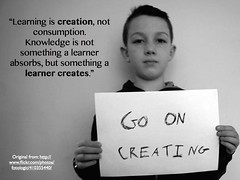
Go on creatingThe initiative resulted in several hundred hours of extra reading for the students - and this, Melanie feels, has helped students create a love of reading. There was a sustained shift of at least 1 to 1.5 stanine (PAT), and up to 4 to 5 stanines. This led to Melanie to ask the question, "In what ways are iwi and schools working together to improve Māori student achievement". Students also grow in confidence ("I'll probably succeed in a lot of stuff like getting a degree at University" - Māia, Year 8), and are happy to speak to pretty much anyone.

Parents also say "success for them is to be standing strong and confident and humble in anything and everything they chose to do and to be able to make mistakes and learn from them". And an Iwi education representative said that "it's that whole person" that is key, and another that "Maori student success is when student are grounded in who they are and where they come from whilst achieving success in whatever field they choose no matter where in the world they are" (Iwi Education Representative). Potential is not something that is based in the future, but it is something that students are 'being' and realising.

Three case studies (Ngā Puna Korero) have informed her thinking to date. The sort of thing that is emerging are the importance of sustaining high trust relationships, and this means that, in part, it's working with iwi in the way that iwi want to be worked with. In part this means working within communities of practice that tend to be more responsive to the needs of the participants. One of the students said "people with two languages like us are gifted, bi-lingual and bi-literate. We are talented and clever" (Ruamano, Year 10). Not all iwi receive money from the ministry for education. The purpose of Iwi Education Project funding is "to build iwi capability to engage in and contribute to the education system and the education of their whānau and hapu. This appropriation is primarily used to produce iwi education strategies, reo strategies and implementation plans; and to deliver iwi education project" (Ministry of Education, 2013, p. 1). However, there are tensions between expectations and responsibility - i.e. whose responsibility is it to implement some aspects of an initiative. The 5 iwi with the main schools include Ngai Tahu (579), Ngati Whatua (397), and Ngati Maniapoto (144). The amount of funding, compared with the geographical area or the schools they work with, however, was not scaled to the funding received...ranging from $40,000 per school to $193 per school that they work with. Resourcing is therefore an issue.

The best way to influence the impact schools is, Melanie proposes, through working with organisations such as Te Toi Tupu. Ideally, it is a case of contacting and working with all stakeholders...something that isn't possible if resourcing isn't sufficient. At the end of the day, however, a student has succeeded when students have the confidence and skills to come back to work with iwi. It's about young children building a sense of where they are from, who they are 'from', what they are doing now (as a whole, culturally shaped person), and also where they are heading next.

 Images
Enhanced by Zemanta

Thursday, October 10, 2013

MOOCs as a convenient means of establishing patterns of power and authority. Thoughts?

An array of Neolithic artifacts, including bra... A lot of things went through my mind as I read Denis McGrath's post, Are Hi-tech solutions contingent on Lo-tech solutions? Many of these thoughts were loosely related wonderings (so please be patient ;-p).

Denis starts from the "premise that all artifacts we use - are man made, therefore they are in essence human developed technologies". Although he doesn't state that man-made = tangible objects, this got me thinking, especially as later he mentions human speech as a technology. Can something that is (certainly prior to writing) intangible therefore be considered an artifact? If 'no', can it therefore be considered a technology? It is certainly a tool, though. So, I did a bit of digging around (as you do).

The Free Dictionary defines artifact in four different ways" "An object produced or shaped by human craft", "Something viewed as a product of human conception or agency rather than an inherent element", "A structure or feature not normally present but visible as a result of an external agent or action", and "An inaccurate observation, effect, or result, especially...in scientific investigation or from experimental error".

These definitions (while not all relevant to the context), I feel help illustrate the complex interplay of the notion of technologies as artifacts as objects shaped by human craft, and as intangibles that are a product of human conception or agency. 

This wider take on artifacts perhaps helps to provide and insight into what happens when we use technologies, compared with consideration of the technology itself. As such, social networks, online communities of practice etc, can all be considered artifacts. When the notion of artifacts as both tangible and intangible comes into play, there are further considerations around the concept that:
technical things have political qualities. At issue is the claim that the machines, structures, and systems of modern material culture can be accurately judged not only for their contributions to efficiency and productivity and their positive and negative environmental side effects, but also for the ways in which they can embody specific forms of power and authority (p. 121, Winner, 1986).
The examples Winner uses illustrate how intended consequences, are frequently underpinned by unintended aspects related to control, as well as political and social effects. As an example, consider the uptake and adaptation of the original design of MOOCs (that has its roots in Connectivism)  by large universities and businesses. It might indeed be extrapolated that
specific features in the design or arrangement of a ... system [are providing] ... a convenient means of establishing patterns of power and authority in a given setting (p. 134, Winner, 1986).
While this in itself remains a controversial suggestion, I do feel that it may offer insights into how and why technologies have (or haven't) been adopted by formal education systems and institutions, and in turn why wide scale adoption has been patchy and fraught with issues.

Thoughts?

Reference Winner, L. (1986). Do artifacts have politics. In L. Winter (Ed.), The whale and the reactor: a search for limits in an age of high technology (pp. 19-39). Chicago: University of Chicago Press. Image Neolithic artifacts. CC licenced. Wikipedia. http://commons.wikipedia.org/wiki/File:N%C3%A9olithique_0001.jpg
Enhanced by Zemanta

Friday, September 13, 2013

Somewhere to learn about hashtags and how to tweet @ without getting all tangled up...

Free twitter badgeImage via WikipediaA day or two ago I received a couple of questions from a friend, Yvonne Hynson, about Twitter: "Can you point me to somewhere to learn all about these hashtags and how to tweet @ without getting all tangled up! Please... I am really enjoying Twitter and finding it much more useful than Facebook for finding out ESOL stuff. Just don't understand all the other stuff next to the tweet!" So, I decided to collect together a couple of resources around Twitter, and some of the basics around using it.

  In a nutshell, the # symbol is called a 'hash tag', and it indicates a key topic that you might want to find out about, and you'll also be able to find the trending topics on the right hand side of your Twitter page. I've included a video below where facebookmari explains it way better!! The @ symbol is used with a Twitter user's username e.g. mine would be @howen. It indicates a reply, mention, and / or a re-tweet, and is a form of providing links in a conversation, as well as being a type of attribution if you are sharing a resource or comment. It means that other people can also join the conversation, especially if you use a combination of @ and a hash tag. For example, I might see a great resource from @playnice about #elearning - the two symbols mean that I can re-tweet her link and other folk know that playnice found and shared the resource, and that the topic is eLearning.
Clear as mud? Never fear - the following resources should shed more light on the basics of using Twitter.
[youtube=http://www.youtube.com/watch?v=aAHitI26MmE&w=420&h=345]
Enhanced by Zemanta

Wednesday, August 28, 2013

Practical strategies for the classroom: Māori students learning as Māori


Late this afternoon (August 28th, 2013 from 3:45pm to 4:45pm) Janelle Ricki facilitated a vibrant webinar, with a focus on focus on Māori students learning as Māori. You can find a recording of the session by clicking this link (you'll need Flash installed to access it), and a copy of the presentation here.

Some of the key questions that she addressed during the session were: How do I move ahead with students who don’t look, sound, or think like me How might I go about inviting student voice, and how might that look? Why do I have to engage with whanau? How do I get to iwi? Actually, who are they and why do they count?

Janelle opened by asking the question 'why'? Why are we having this discussion? One of the reasons are the statistics that show that our Māori students have long been underserved by our education system. E.g. 16 percent of Māori students will become disengaged from any form of any education, employment or training by the age of 17 compared with 6 percent of Pākehā students. Janelle also shared the provocative statement that "Our Māori students are not failing in our education system, our education system is failing them". Several participants commented, including Anne who indicated "I think our education system is failing to meet the needs of a HUGE number of our priority learners..."; Nicky responded that "I agree Anne but it is also a huge generalisation.  There are many different reasons students fail".
strawberrykete
strawberrykete (Photo credit: orinoko42)

In 1856 Edward Shortland wrote that "Curbing the will of the child by harsh means was thought to tame his spirit, and to check the free development of his natural bravery. The chief aim, therefore in the education of [Māori] children being to make them bold, brave and independent in thought and act". Janelle then asked everyone to think about what they might change, as teachers, to help their students be bold, brave and independent. Yvonne suggested "Seriously think[ing] about  independence rather than  co dependence"; and Nicky shared that she challenges her "students to take risks and make mistakes already.  I would certainly be able to interact with them more and allow for more of their own interests to enter into the curriculum". And Janine, proposed that we look at "Us, role modelling those 2 words - bold and brave and then asking the question- how dependent are our learners of us? What's stopping them taking the risk?".

The next question Janelle posed is the 'what'...what is being culturally responsive? She also indicated that "if we teach today as we did yesterday, we rob our tamariki of tomorrow", which, in part, requires a shift from just in case learning, to just in time learning. The aim is therefore to help students to develop skills and strategies, which include confidence, capability, ability to collaborate and be connected, competitive and culturally responsive. Janelle outlined why some of these skills might be challenging for some Māori learners. For example, confidence, whereby they can speak comfortably about themselves - their strengths and achievements - which can be very challenging.


So, what is culturally responsive? In part it is accepting and inclusive, and involves us looking at our students in a more holistic way - their emotional, and physical needs, for example...not just the academic skills (i.e. not just the 'head and shoulders'). One of the first steps is being accepting of difference, and then moving along a continuum to where you become actively inclusive. Responsiveness is a two way street and is part of a reciprocal relationship, whereby the educator is committed to meet the student half way and responding to who they are.

How does this work in our classrooms? Janelle outlined the 3 Ps taken from the treaty of Waitangi:
  • Partnership
    • active engagement (tip: keep extending invitations to parent and whānau - that gives the invitation some mana)
    • collaborative decisions
    • equity and equality
  • Participation
    • They know their kids best and want what you want
    • They have valuable knowledge and expertise
    • They are more than just immediate family
  • Protection
    • Of their tikanga, culture, identity, language
Janelle shared some suggestions about running a whānau hui including:
  • Appropriate time (evening). The staff at Putaruru College also suggested an "all day drop in".
  • Kai. The staff at Putaruru College shared the idea about "students producing the kai"
  • Tikanga (for example, making sure that the food is blessed)
  • Child care
  • Students
  • Kaupapa: Māori student achievement
    • What are the aspirations for your tamariki?
    • What are we doing well?
    • What could we be doing better?
Engaging with iwi and hapu is tricky. Under the 3 Ps:
  • Partnership
    • acknowledge mana whenua
    • their mokopuna
  • Participation
    • invite and engage
    • go and learn about your place - the people that were there before the school was developed; what's the history?
  • Protection
    • history
    • tikanga
    • reo
    • mana

Engaging with Māori students. Under the 3 Ps:
  • Partnership
    • acknowledge their mana and whakapapa
    • acknowledge and grow their potential
  • Participation
    • invite and engage
    • go and learn about them - go past knowing about what they are interested in and who lives in their house
  • Protection
    • their aspirations
    • their culture
    • their whānau - whānau is everything; even when there are challenges the students love their whānau unconditionally...and we need to give mana to this.
Janelle provided a raft of suggestions around how to encourage student voice, as well as how to integrate te reo Māori into curriculum.

This was an incredibly rich session with heaps of really great suggestions and ideas. The conversation in the backchannel was lively and, at times, provocative. Feedback for the session included, from Anne "Kia ora Janelle - Inspirational webinar....", and Yvonne asked that the session be repeated. Matt indicated that his school is "just beginning to look at the issue" , and the session has prompted some good suggestions. 


Images


Enhanced by Zemanta

Monday, August 26, 2013

Internet TV for the visually impaired

I hadn't really appreciated what it must be like to be able to hear the audio and not hook into the visual context of videos, movies, and TV shows. The closest I come is the frustration when I am out running and listening to podcasts and the presenter on a TED Talk shows a graph or illustration that they don't describe, and yet it's central to their overall focus.

According to Robert Kingett in Internet TV for the blind "virtually no programs on TV had audio description (**see below to find out what this is), also known as video description to describe to the visually impaired what was happening on the screen. Many people had to just guess about what was happening when watching or ask a nearby sighted person. Students in school were at a serious disadvantage. PBS was the only broadcaster providing educational content that had audio description. In 2010 however, access to TV became a law, finally forcing broadcasters to provide accessible programming to people who were visually impaired" (source).

It was good to read about therefore, about Blindy.TV "a charitable project created by blind people that believe that the blind should be able to enjoy the same television programming that entertains and contributes to the shared culture of their sighted family and friends" (source). Many governments legislate that TV channels have to provide some 'accessible' content (usually measured in hours), but the Internet is one area that has largely escaped such legislation - something that is an issue as increasing numbers of "people are migrating away from the TV and to bandwidth, favoring the on demand access anywhere" (source).

While the service has been developed in the United States (and I couldn't get anything to play on my Mac, making me wonder if it's limited to the US, or if it's an issue with Mac compatibility :-p), it is a great step forward. And I wonder if there is a similar initiative in NZ is for a similar service? (Including in Te Reo Maori?)  

  *** "Audio Description involves the accessibility of the visual images of theater, television, movies, and other art forms for people who are blind, have low vision, or who are otherwise visually impaired. It is a narration service (provided at no additional charge to the patron) that attempts to describe what the sighted person takes for granted -- those images that a person who is blind or visually impaired formerly could only experience through the whispered asides from a sighted companion" (source). 

Read more here: Internet TV for the blind   


Image: 'twitter logo map 09' http://www.flickr.com/photos/82298325@N00/3346248321 Found on flickrcc.net
Enhanced by Zemanta

Thursday, August 15, 2013

Twelve practical suggestions about how to get the most of participating in online communities

Communication
Whenever we learn anything we are influenced by other people, as well as by our culture, our beliefs, experiences we’ve had, the understandings we’ve developed about the world and the way it works, and our current context. Every human being’s learning is therefore shaped by the people around them, even when they are not directly seeking to learn collaboratively. Language and the way we use it to communicate plays a large part in shaping our experiences, especially in the online world.
I suspect that most have us have been misunderstood when they have sent an email, posted a comment in an online forum, or typed up a blog post. Why do these misunderstandings arise? Nancy White (2000) highlights 5 key differences between face-to-face and/or real time (synchronous) communication, and communication where there is a time delay between the initial communication and the reply (asynchronous):
  • No visual cues - this means that as you type you will not be able to pick up on the physical cues you are used to receiving in face-to-face contexts. Written language can be quite slippery, and something you may have meant to be lighthearted, may be read as something totally different.
  • Delayed response - you are likely to be used to this from text messaging and emails. Sometimes, however, the delay might be exceptionally long, or you may not receive a reply at all. There are also group dynamics where a community member contributes a lot, or logs in, reads but does not leave a comment or reply (lurking).
  • Illusion of distance - most of us have done it...sent a communication that we’ve instantly regretted but can’t retrieve. Often it’s something we’d never say if we were in the same room as the person, and as such is outside of social norms.
  • Biased toward writers - while it is becoming easier to communicate using audio and video, novices to online learning communities tend to start with text-based communications. This puts those with less developed literacy skills at a disadvantage.
  • Public versus private - some community members may have quite strong views about what should be public and what should be private; for example, some members will not want to reflect critically about a skill they have trialled or an experience they have had.
So now we have looked at some of the key differences, we can now explore some of the strategies we can use to 1) help encourage positive dialogue in online spaces, in part by modelling responses; 2) minimise the risk of misunderstandings and communications that go awry; and 3) ensure that we don’t inadvertently ‘shut down’ discussions.

Encouraging positive, ongoing dialogue and participation

The following examples are only a very few suggestions and models of approaches you might use (adapted from Anderson, et al, 2001, p. 8) . There are many others, and I would be delighted if this grew into a much bigger resource with a broader range of ideas...so, please add you’s in the comment box below :-)
  1. Identifying areas of conceptual / theoretical agreement/disagreement: "@Xu Lin, Janelle has provided some compelling suggestions that seem to take a rather different stance from your’s. It would be great if you had the time to respond to her?"
  2. Seeking to reach consensus/understanding: "It feels to me like Martin and Whare are, in essence saying essentially the same thing :-)"
  3. Encouraging, acknowledging, or reinforcing contributions: "Thank you for your insightful comments"
  4. Setting climate for learning: "@Manu - I love the fact that you are 'thinking out loud' in this conversation. It’s great to be able to follow the flow of your thoughts. Would be good to hear if you reached a final conclusion ;-)"
  5. Drawing in participants, prompting discussion: "Any thoughts on this issue?" "Anyone care to comment?". Alternatively, you might want to ask quite specific questions that encourage, for example, the write of a blog post to dig a bit deeper: “The experience you describe here is heartening. I was wondering, though, did you see specific shifts in student writing while they were using Storybird? Were students interacting differently than when they were using pens and paper?
  6. Unpick resources, ideas and comments: "In the video Black says [insert provocative quote]…what do you think? Do you agree / disagree? Have you had similar experiences?"
  7. Focus the discussion on specific issues: "Hmmm - I wonder; it feels as though...[insert specific issue] has been explored a lot in the media, but I am not sure that I agree with the coverage that has been given, because...[select a specific aspect of the issue] "
  8. Summarise discussions: "The original question was …Krishna said...Nigel then responded...and Togi concluded that…. But I feel as though we haven't addressed…"
  9. Explore understanding / suggest explanations.: "I feel as though you are pretty close in your interpretation of …[insert topic / theory / concept here], but I’m not sure you accounted for… …and I feel this is important because…”
  10. Gently highlight what may be misconceptions: "While it sounds as though from a senior management perspective this is likely to be a positive way forward, but I’m not so sure it holds true in other roles…for example, when I was...what do you reckon?"
  11. Share ‘knowledge’ from diverse sources, e.g., videos, articles, podcasts, personal experiences (and include pointers to resources): "I was out running and listening to a podcast, where Gilly Salmon was saying …If you are keen to listen to the podcast in full, you can find it at http://www…."
  12. Responding to technical concerns: "If you want to include a hyperlink in your message, you need to . . ."
A few more tips (from the Australian Flexible Learning Network) for fostering a safe and engaging online community area include:
  1. Sound like yourself, use a 'genuine' voice and model the style and tone of the 'conversation' you would like to see from other online members.
  2. Explore useful communication such as how and when / if to use acronyms and emoticons (smilies).
  3. Use plenty of white space and if you can, use different colours and fonts to enhance clarity and identify key pieces of information.

Roles for effective facilitation

You might be involved in facilitating an online community, and the following are some proposed roles and functions (suggested by Feenberg and Xin, n.d.) that can help you identify on what your purpose is, and so select positive language to match that purpose.
  • Meta Functions: in your role as facilitator you can help foster conditions required for good communication; watch multiple conversations and weave common threads between participant comments, offering prompts and summary when important; help address issues around information overload; summarise, and compare, and contrast different points of view.
One of the issues here is that you “run the risk of wresting ownership of the dialogue from its contributors” (Collison et al., 2000, p. 141). So, often you will need to leave the community members to formulate questions that will deepen the dialogue, while you also “avail yourself of techniques that explore tensions without seeking resolution, examine rationale for beliefs or assumptions without assigning value” (Collison et al., 2000, p. 141).
  • Contextualizing: this is where, as a facilitator, you provide context; select themes or questions for discussion (or sets up a process for community members to do this); open discussions; model interactions and behaviours; share your own experiences; set the tone; and refer to resources or links to extend thinking or that might be useful for community members.
  • Monitoring: in this role, you recognise community members’ contributions; help keep the momentum going in discussions if necessary; and prompt contributions by posing new questions.
As part of monitoring, you will need to acknowledge contributions from every member at some point - this is a bit of a balancing act though, and you don’t want to become the sole voice or the person who always replies.
Positive reinforcement can be very powerful, but remember that by publicly praising a participant you can shut down further dialogue. Other participants reading your message of approval may think: ‘I don’t think I can really add to that’, or your message may create anxiety if other participants think: ‘Why didn’t (s)he respond similarly to my message?’.

Cultural responsiveness

In online communities, as in any other community, there are ethical issues of respect for one another regardless of gender, ethnicity, religion, class and age. As such, as members of an online community, we need to be culturally responsive, and to be aware of the diversity of community members. While this list is not exhaustive, some things to be aware of are,
  • some content may be sensitive – for example, politically correct in one culture but offensive in another culture
  • a request for community members to upload an image of themselves would be inappropriate for some cultures (an image of something that interests them may be OK though)
  • language used may potentially reinforce cultural stereotypes
When posting and/or responding in an online community you may want to look for resources that represent more than one cultural viewpoint.
And remember - recognising that participation in an online community cannot be culturally neutral is the first step in the process of becoming culturally competent (Palloff & Pratt, 2003, p. 41).
There are many more and it would be excellent if you make suggestions (or relate your own experiences) in the comment box below.

Additional resources

  • Avoiding Online Conflict (Moussou, & White, 2004) - provides 4 tips for avoiding online misunderstandings. It also includes some great questions for you to think about in connection with your facilitator roles and responsibilities when a community is experiencing negative behaviours.
  • Wheeler’s blog post, Lurking and loafing (2010), is worth reading in full if you have the time.
  • Let's get more positive about the term 'lurker' looks at the value of lurking, resistance to lurking, and why lurkers ‘lurk’. It also summarises some pros and cons, and has a short, but useful list of suggested further reading.

Images

Enhanced by Zemanta

Thursday, August 8, 2013

Allowing and incentivising schools to adopt technology = progress in education?

I took a couple of sharp intakes of breath while reading this article (Schools are failing our children simply because they are technophobes, by Allister Heath, that was shared by Mike Preece).
I certainly agreed with some of the broad statements ("universities...still mostly requir[e] students to study full time on location and pay increasingly unaffordable fees for the privilege of listening to often mediocre lectures"), as well as with the overall message that education, is in many cases, not meeting many of the needs of learners.
However, I admit to a visceral reaction when the author referred to problems with education as including "no automation, no economies of scale, no productivity gains" - which are surely terms rooted in business developments from the 19th century! Currently, many industries are returning to a small-scale, responsive model of working that has many more similarities to cottage industries than the huge behemoth of companies that are beginning to groan. Rather, for education, shouldn't we be thinking about agile, responsive, individualised facilitation of learning experiences?
In addition, I felt there was a bit of a problem with the author's suggestion that there is a direct causal link between "shockingly high levels of youth unemployment" and the provision of education that "suits neither students nor their employers". Hmmmm - growing population, ongoing recession, diminishing natural resources, the growth of India and China as economic and business powers - maybe these also have some impact on high levels of youth unemployment?
Finally, the whole notion of "there is no proper transition from campus to office": does anyone remember the graduate positions that used to be offered (and still are by some companies) to help with this transition? It isn't purely the responsibility to education providers to smooth this transition; rather, I believe, it needs to be a joint effort that includes education providers, business, and wider communities.
At the end of the day, I suggest that progress for education is way more complex than "paving the way for a more competitive and open education market, allowing and incentivising schools to adopt technology". What do you think? Please jump into the conversation....
Images:
Enhanced by Zemanta