Wednesday, December 11, 2013

A man who influenced the world: Nelson Mandela

I would like to acknowledge the loss of Madiba - Nelson Mandela. There have been many tributes to his life, and I encourage you to dip into some of them. He was also a great advocate for, and supporter of, education for all, saying that “education is the most powerful weapon which you can use to change the world”.

Nelson Mandela was a fundamental influence to my thinking and beliefs about racial equality, leadership, and standing up for what you believe - even when you may need to pay the ultimate price. He remains an inspiration.

While he is no longer with us in person, his power, his influence - and what he achieved - will live on.
You may want to watch this speech that Nelson Mandela gave at Harvard in 1998. The audio quality is poor, but the speech itself is a testament to the unswerving commitment, as well as the great sense of humour, Madiba had. Highly recommended. 


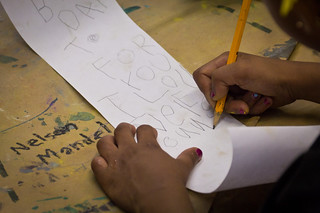
Image: Nelson Mandela Day at ProjectArt, Harlem. cc licensed ( BY NC SA ) flickr photo by Africa Renewal: http://flickr.com/photos/africa-renewal/7599667424/
Enhanced by Zemanta

Thursday, November 21, 2013

Efficiency but not necessarily motivation: Student attitudes to using mobile devices in their learning

The infographic below was developed by the Australia-based organisation, Open Colleges. The things that caught my attention were some of the statistics, which, while fairly meaningless on their own, do present an attitudinal 'picture'.
  • 59% of students said that they would like to bring in their own mobile devices to enhance learning
  • 86% of students believe they study more efficiently with access to mobile technologies
  • 77% of teachers believe that access to technology boosts student motivation
  • 76% of teachers feel it enhances the material that is being learned
It was interesting that the students didn't report increased levels of engagement or motivation, but rather focussed on efficiency and organisation, which raised some questions for me around 'how' students were being encouraged to learn in these tech enabled spaces.

The infographic also reports on the results of a study whereby when teachers integrated digital games into lessons, students raised their average test scores from 79.1% to 91.5%.

The picture sketched here is one of increased engagement and motivation...although some of the bigger questions around, for instance, community involvement and culturally responsive design are not mentioned, and the development of blended learning sessions and approaches is only alluded to (e.g. there is a brief mention of Problem Based Learning).

It would be good to hear what your reactions was, overall, to the infographic, but also what else you feel is missing.

Enhanced by Zemanta

Thursday, November 14, 2013

Fear underpinned by nostalgia? Opinions of what the Facebook generation need to learn

Do we really need children to go 'cold turkey' from their mobile devices? Is there a requirement for 'book camps' with printed materials only? Is there a middle ground for the Internet generation? Or do we need to re-think many of our biases about how we feel learning is 'done best'?

As I listened to the following podcast (What does the Facebook generation need to learn? - MP3 - from 2011) some of the points of view expressed felt to me like fear, that was underpinned by a sense of nostalgia.

Some aspects of learning and life  have fundamentally changed since some of the world became 'connected'.

Siemens (2004) identifies behaviorism, cognitivism, and constructivism as the three theories of learning most often used to inform the design and creation of learning experiences. These theories, however, “were developed in a time when learning was not impacted through technology” [emphasis not in the original] (Para. 1). Instead, Siemens argues, we need to think about the flow of information in our current knowledge economy as the flow of oil through an oil pipe in an industrial economy - the difference though is that “the pipe is more important than the content within the pipe. Our ability to learn what we need for tomorrow is more important than what we know today‟ (2004).

As you might have guessed from the name connectivism is based on the idea that all learning starts with a connection. The connection can be neural, conceptual, and/or social (Siemens, 2008), and learning is held to be “the ability to construct and traverse connections” (Downes, 2007). In other words, a learner makes sense of existing knowledge and reinterprets it in a way that fits within their existing knowledge framework, and in the process connects, disconnects, and reconnects “knowledge fragments through knowledge creation” (Littlejohn, 2011, Para. 3). To help facilitate connections and information sharing while encouraging life-long learning in the individual as well as the group, learning occurs within learning ecologies, communities and networks (Siemens, 2003).

Framed within connectivism, formal education systems appear flawed, because they are “trying to achieve a task (learning) with a tool (teaching) in an artificial knowledge construct (course) (Siemens, 2005, Para. 1).

So - return to the debate - I really don't feel it's about whether we should be denying young learners access to mobile devices. Rather it is a two-pronged momentum that is required; the first is a focus on encouraging learners to critically think about how they are using their device, building their relationships, and how they are constructing their understandings. And the second is to take a long hard look at the underlying biases that are informing the opinions of the folks in charge of making education policies, and shaping learning experiences on a day-to-day basis.

Your thoughts?

The debate panel included:
Chair: Dr Anthony Seldon, Master, Wellington College
Panel to include: Dr Sarah Churchwell, Senior Lecturer in American Literature and Culture, University of East Anglia; Professor Niall Ferguson, Harvard University, LSE, Author, ‘Civilization’ and Columnist, Newsweek; Harvey Goldsmith, Chairman, Ignite; Jenni Russell, Commentator, The Sunday Times, The Guardian and London Evening Standard

References:

Image: Young girl with smart phone. cc licensed ( BY ) flickr photo by "PictureYouth": http://flickr.com/photos/45688888@N08/5915484733/
Enhanced by Zemanta

Tuesday, October 22, 2013

Looking at learner success through a cultural lens: Iwi and whānau 'speak'

Image of a koru Melanie Riwai-Couch opened the Te Toi Tupu hui by talking a little bit about the work she is doing with iwi. A lot of the things she is looking it is around iwi and whānau 'voice'.

Melanie is from a bicultural marriage at a time when it was unusual, and when her parents split, her father brought her up. Growing up with strong Māori roots gave her an interesting perspective on life. She lives and works in Ngāi Tahu, but does not claim Ngāa Tahu in her ancestry. There is a whole other world when it comes to iwi.

Melanie also teaches at the kura, and she discovered all of these things that didn't work for me. The students tried really hard, but there were a lot of things that kept tripping them up. For example, the letter 'i' - is it always a capital letter? So why doesn't me, he, and she have a capital letter too. It was a way to peel back the cultural layers of the spelling traditions, and the cultural shaping that underpins them. She went to the community partners to see if she could find student teachers who would come into the kura and to sit with the children while they read.

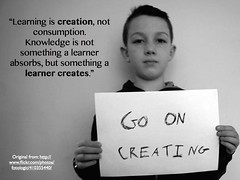
Go on creatingThe initiative resulted in several hundred hours of extra reading for the students - and this, Melanie feels, has helped students create a love of reading. There was a sustained shift of at least 1 to 1.5 stanine (PAT), and up to 4 to 5 stanines. This led to Melanie to ask the question, "In what ways are iwi and schools working together to improve Māori student achievement". Students also grow in confidence ("I'll probably succeed in a lot of stuff like getting a degree at University" - Māia, Year 8), and are happy to speak to pretty much anyone.

Parents also say "success for them is to be standing strong and confident and humble in anything and everything they chose to do and to be able to make mistakes and learn from them". And an Iwi education representative said that "it's that whole person" that is key, and another that "Maori student success is when student are grounded in who they are and where they come from whilst achieving success in whatever field they choose no matter where in the world they are" (Iwi Education Representative). Potential is not something that is based in the future, but it is something that students are 'being' and realising.

Three case studies (Ngā Puna Korero) have informed her thinking to date. The sort of thing that is emerging are the importance of sustaining high trust relationships, and this means that, in part, it's working with iwi in the way that iwi want to be worked with. In part this means working within communities of practice that tend to be more responsive to the needs of the participants. One of the students said "people with two languages like us are gifted, bi-lingual and bi-literate. We are talented and clever" (Ruamano, Year 10). Not all iwi receive money from the ministry for education. The purpose of Iwi Education Project funding is "to build iwi capability to engage in and contribute to the education system and the education of their whānau and hapu. This appropriation is primarily used to produce iwi education strategies, reo strategies and implementation plans; and to deliver iwi education project" (Ministry of Education, 2013, p. 1). However, there are tensions between expectations and responsibility - i.e. whose responsibility is it to implement some aspects of an initiative. The 5 iwi with the main schools include Ngai Tahu (579), Ngati Whatua (397), and Ngati Maniapoto (144). The amount of funding, compared with the geographical area or the schools they work with, however, was not scaled to the funding received...ranging from $40,000 per school to $193 per school that they work with. Resourcing is therefore an issue.

The best way to influence the impact schools is, Melanie proposes, through working with organisations such as Te Toi Tupu. Ideally, it is a case of contacting and working with all stakeholders...something that isn't possible if resourcing isn't sufficient. At the end of the day, however, a student has succeeded when students have the confidence and skills to come back to work with iwi. It's about young children building a sense of where they are from, who they are 'from', what they are doing now (as a whole, culturally shaped person), and also where they are heading next.

 Images
Enhanced by Zemanta

Thursday, October 10, 2013

MOOCs as a convenient means of establishing patterns of power and authority. Thoughts?

An array of Neolithic artifacts, including bra... A lot of things went through my mind as I read Denis McGrath's post, Are Hi-tech solutions contingent on Lo-tech solutions? Many of these thoughts were loosely related wonderings (so please be patient ;-p).

Denis starts from the "premise that all artifacts we use - are man made, therefore they are in essence human developed technologies". Although he doesn't state that man-made = tangible objects, this got me thinking, especially as later he mentions human speech as a technology. Can something that is (certainly prior to writing) intangible therefore be considered an artifact? If 'no', can it therefore be considered a technology? It is certainly a tool, though. So, I did a bit of digging around (as you do).

The Free Dictionary defines artifact in four different ways" "An object produced or shaped by human craft", "Something viewed as a product of human conception or agency rather than an inherent element", "A structure or feature not normally present but visible as a result of an external agent or action", and "An inaccurate observation, effect, or result, especially...in scientific investigation or from experimental error".

These definitions (while not all relevant to the context), I feel help illustrate the complex interplay of the notion of technologies as artifacts as objects shaped by human craft, and as intangibles that are a product of human conception or agency. 

This wider take on artifacts perhaps helps to provide and insight into what happens when we use technologies, compared with consideration of the technology itself. As such, social networks, online communities of practice etc, can all be considered artifacts. When the notion of artifacts as both tangible and intangible comes into play, there are further considerations around the concept that:
technical things have political qualities. At issue is the claim that the machines, structures, and systems of modern material culture can be accurately judged not only for their contributions to efficiency and productivity and their positive and negative environmental side effects, but also for the ways in which they can embody specific forms of power and authority (p. 121, Winner, 1986).
The examples Winner uses illustrate how intended consequences, are frequently underpinned by unintended aspects related to control, as well as political and social effects. As an example, consider the uptake and adaptation of the original design of MOOCs (that has its roots in Connectivism)  by large universities and businesses. It might indeed be extrapolated that
specific features in the design or arrangement of a ... system [are providing] ... a convenient means of establishing patterns of power and authority in a given setting (p. 134, Winner, 1986).
While this in itself remains a controversial suggestion, I do feel that it may offer insights into how and why technologies have (or haven't) been adopted by formal education systems and institutions, and in turn why wide scale adoption has been patchy and fraught with issues.

Thoughts?

Reference Winner, L. (1986). Do artifacts have politics. In L. Winter (Ed.), The whale and the reactor: a search for limits in an age of high technology (pp. 19-39). Chicago: University of Chicago Press. Image Neolithic artifacts. CC licenced. Wikipedia. http://commons.wikipedia.org/wiki/File:N%C3%A9olithique_0001.jpg
Enhanced by Zemanta

Friday, September 13, 2013

Somewhere to learn about hashtags and how to tweet @ without getting all tangled up...

Free twitter badgeImage via WikipediaA day or two ago I received a couple of questions from a friend, Yvonne Hynson, about Twitter: "Can you point me to somewhere to learn all about these hashtags and how to tweet @ without getting all tangled up! Please... I am really enjoying Twitter and finding it much more useful than Facebook for finding out ESOL stuff. Just don't understand all the other stuff next to the tweet!" So, I decided to collect together a couple of resources around Twitter, and some of the basics around using it.

  In a nutshell, the # symbol is called a 'hash tag', and it indicates a key topic that you might want to find out about, and you'll also be able to find the trending topics on the right hand side of your Twitter page. I've included a video below where facebookmari explains it way better!! The @ symbol is used with a Twitter user's username e.g. mine would be @howen. It indicates a reply, mention, and / or a re-tweet, and is a form of providing links in a conversation, as well as being a type of attribution if you are sharing a resource or comment. It means that other people can also join the conversation, especially if you use a combination of @ and a hash tag. For example, I might see a great resource from @playnice about #elearning - the two symbols mean that I can re-tweet her link and other folk know that playnice found and shared the resource, and that the topic is eLearning.
Clear as mud? Never fear - the following resources should shed more light on the basics of using Twitter.
[youtube=http://www.youtube.com/watch?v=aAHitI26MmE&w=420&h=345]
Enhanced by Zemanta

Wednesday, August 28, 2013

Practical strategies for the classroom: Māori students learning as Māori


Late this afternoon (August 28th, 2013 from 3:45pm to 4:45pm) Janelle Ricki facilitated a vibrant webinar, with a focus on focus on Māori students learning as Māori. You can find a recording of the session by clicking this link (you'll need Flash installed to access it), and a copy of the presentation here.

Some of the key questions that she addressed during the session were: How do I move ahead with students who don’t look, sound, or think like me How might I go about inviting student voice, and how might that look? Why do I have to engage with whanau? How do I get to iwi? Actually, who are they and why do they count?

Janelle opened by asking the question 'why'? Why are we having this discussion? One of the reasons are the statistics that show that our Māori students have long been underserved by our education system. E.g. 16 percent of Māori students will become disengaged from any form of any education, employment or training by the age of 17 compared with 6 percent of Pākehā students. Janelle also shared the provocative statement that "Our Māori students are not failing in our education system, our education system is failing them". Several participants commented, including Anne who indicated "I think our education system is failing to meet the needs of a HUGE number of our priority learners..."; Nicky responded that "I agree Anne but it is also a huge generalisation.  There are many different reasons students fail".
strawberrykete
strawberrykete (Photo credit: orinoko42)

In 1856 Edward Shortland wrote that "Curbing the will of the child by harsh means was thought to tame his spirit, and to check the free development of his natural bravery. The chief aim, therefore in the education of [Māori] children being to make them bold, brave and independent in thought and act". Janelle then asked everyone to think about what they might change, as teachers, to help their students be bold, brave and independent. Yvonne suggested "Seriously think[ing] about  independence rather than  co dependence"; and Nicky shared that she challenges her "students to take risks and make mistakes already.  I would certainly be able to interact with them more and allow for more of their own interests to enter into the curriculum". And Janine, proposed that we look at "Us, role modelling those 2 words - bold and brave and then asking the question- how dependent are our learners of us? What's stopping them taking the risk?".

The next question Janelle posed is the 'what'...what is being culturally responsive? She also indicated that "if we teach today as we did yesterday, we rob our tamariki of tomorrow", which, in part, requires a shift from just in case learning, to just in time learning. The aim is therefore to help students to develop skills and strategies, which include confidence, capability, ability to collaborate and be connected, competitive and culturally responsive. Janelle outlined why some of these skills might be challenging for some Māori learners. For example, confidence, whereby they can speak comfortably about themselves - their strengths and achievements - which can be very challenging.


So, what is culturally responsive? In part it is accepting and inclusive, and involves us looking at our students in a more holistic way - their emotional, and physical needs, for example...not just the academic skills (i.e. not just the 'head and shoulders'). One of the first steps is being accepting of difference, and then moving along a continuum to where you become actively inclusive. Responsiveness is a two way street and is part of a reciprocal relationship, whereby the educator is committed to meet the student half way and responding to who they are.

How does this work in our classrooms? Janelle outlined the 3 Ps taken from the treaty of Waitangi:
  • Partnership
    • active engagement (tip: keep extending invitations to parent and whānau - that gives the invitation some mana)
    • collaborative decisions
    • equity and equality
  • Participation
    • They know their kids best and want what you want
    • They have valuable knowledge and expertise
    • They are more than just immediate family
  • Protection
    • Of their tikanga, culture, identity, language
Janelle shared some suggestions about running a whānau hui including:
  • Appropriate time (evening). The staff at Putaruru College also suggested an "all day drop in".
  • Kai. The staff at Putaruru College shared the idea about "students producing the kai"
  • Tikanga (for example, making sure that the food is blessed)
  • Child care
  • Students
  • Kaupapa: Māori student achievement
    • What are the aspirations for your tamariki?
    • What are we doing well?
    • What could we be doing better?
Engaging with iwi and hapu is tricky. Under the 3 Ps:
  • Partnership
    • acknowledge mana whenua
    • their mokopuna
  • Participation
    • invite and engage
    • go and learn about your place - the people that were there before the school was developed; what's the history?
  • Protection
    • history
    • tikanga
    • reo
    • mana

Engaging with Māori students. Under the 3 Ps:
  • Partnership
    • acknowledge their mana and whakapapa
    • acknowledge and grow their potential
  • Participation
    • invite and engage
    • go and learn about them - go past knowing about what they are interested in and who lives in their house
  • Protection
    • their aspirations
    • their culture
    • their whānau - whānau is everything; even when there are challenges the students love their whānau unconditionally...and we need to give mana to this.
Janelle provided a raft of suggestions around how to encourage student voice, as well as how to integrate te reo Māori into curriculum.

This was an incredibly rich session with heaps of really great suggestions and ideas. The conversation in the backchannel was lively and, at times, provocative. Feedback for the session included, from Anne "Kia ora Janelle - Inspirational webinar....", and Yvonne asked that the session be repeated. Matt indicated that his school is "just beginning to look at the issue" , and the session has prompted some good suggestions. 


Images


Enhanced by Zemanta